
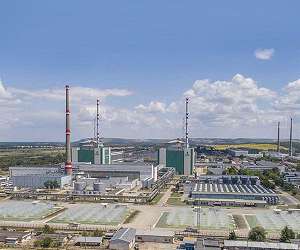
Cracks were detected in components of a reactor at Bulgaria's Kozloduy nuclear plant during maintenance work, the nuclear regulator said Tuesday, insisting however there had been no leakage.
Maintenance checks on September 28 found "mechanic defects (cracks) in the upper part of the protective tubes of three control rods" in the reactor's primary radioactive circuit, a statement on the nuclear regulator's website said.
"The control systems have not detected leakage out of the primary circuit during the (reactor's) exploitation in the previous fuel cycle," the statement added.
"The defective tubes have been replaced," the regulator said.
Economy and Energy Minister Traicho Traikov, who paid an emergency visit to Kozloduy on Tuesday, added: "Defects have been detected in a total of 31 metal control rods."
"But these defects have not posed any threats to safety at the plant."
An order for the rods' replacement had already been placed with their Russian maker, Gidropress, but repairing and restarting the reactor would take another three to four weeks, Traikov added.
The 1,000-megawatt reactor, which was shut for planned refuelling on September 18, was initially due to resume operations and be plugged back onto the country's electricity grid on October 18.
After initial faults were found on September 28, the regulator ordered "extensive checks on all control rods," which found more defects, bringing the total number of rods to be replaced to 31, Traikov explained.
The economy ministry and the grid operator were preparing emergency measures Tuesday to prevent serious disruptions in the electricity supply, while the country is left only with Kozloduy's second 1,000-megawatt reactor in operation.
These measures included plans to cut exports, switch on two coal-fired plants and up capacity at key hydropower plants.
Bulgaria might cut as much as two-thirds of its daily exports of about 1,000 megawatts of electricity to neighbouring Greece, Serbia and Macedonia, Traikov noted.
It would also have to delay the planned resumption in November of electricity exports to Turkey, he added.
Share This Article With Planet Earth
