
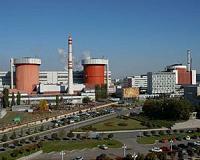
Although the Nuclear industry has experienced tough market conditions in recent years, one subsector which has grown substantially is decommissioning. The NDA estate now accounts for Pounds 3.2 billion annually in decommissioning spend, with analysts estimating the overall value of the sub-sector at Pounds 18 billion – clearly the nuclear downturn has benefits for the canny operator.
Whilst the UK leads the world in decommissioning practice and methodology, cost-estimation is one grey area which continues to prove to be a challenge for even the leading minds of the industry.
"The idea of understanding what "value for money" actually looks like is complicated" highlighted Enkom Consulting Managing Director and founder Martyn Jenkins. "As much as cost-estimations are estimations, there need to be a much stronger foundation and a higher level of robustness and credibility to ensure we are underwriting sound business decisions.
We need to increase the confidence in the estimates themselves"
The Infrastructure Cost Review: Annual Report 2012-2013 identifies the need for "a renewed effort to improve the capture and sharing of infrastructure pipeline/ performance data and industry and project level benchmarking" as a key priority.
Therefore, the cost capture and analysis of project costs for energy, and in particular nuclear projects, forms an important tool in increasing confidence in estimates.
Within the Utilities themselves, stakeholders have now been tasked with ensuring that there is a credible plan, which reflects the new objectives of reducing decommissioning costs by Pounds several billion over coming years under the Government's ongoing austerity measures .
It's a very aggressive and ambitious end-goal, however one which is more than achievable with a higher level of confidence in cost-estimation strategies.
"Sellafield is the most complex decommissioning site in the world, and there is a growing pressure within the organization to ensure that the baseline numbers are reliable and accurate" Martyn added "This is just one example; however it is representative of a growing trend in the industry on the whole.
We're seeing a higher level of accountability and transparency, which drives towards a more stringent approach to cost-estimation"
The most significant challenge is increasing the accuracy and reliability of the cost-estimation process, but current estimating protocol does not typically account for the flexibility and fluidity of varying market conditions and changing decommissioning practices.
Taken at face value, projects where out turn costs have exceeded the baseline may suggest there were flaws in the estimate preparation.
However, when examined more closely it may be shown that there were valid reasons for this.
"We're seeing some examples where the requirements of the project have changed as time have moved forward, such that what is actually being delivered is different from what was initially anticipated" commented Martyn "This can have quite a significant impact on the accuracy of the initial cost-estimation"
"We have now developed a technique using data models which can increase the initial accuracy of the cost-estimation"
"By retaining the appropriate level of detail within the estimate, but incorporating the ability to refine and improve the data through a modeling approach, we can demonstrate value for money by bench-marking the data against other models, ultimately increasing the level of confidence in the estimation"
Enkom's approach led to the establishment of a common cost structure along with a library of project case studies and cost norms for projects on behalf of nuclear clients.
These have been specifically identified to provide accurate real cost data to inform similar future projects, ultimately providing a significantly more accurate cost-estimation.
"The benefits of such an approach are felt throughout the entire organization.
You add genuine value by speeding up decision-making and keeping the focus on delivery rather than discussion" added Martyn.
