
Colombian President Juan Manuel Santos signed a decree Tuesday setting out the question voters will answer in a decisive referendum on the government's historic peace deal with the FARC rebels.
After half a century of war and nearly four years of talks, the fate of Colombia's peace process will now come down to how voters answer the following question on October 2: "Do you support the final accord to end the conflict and build a stable and lasting peace?"
The peace deal concluded last Wednesday between government and rebel negotiators in Cuba will only be ratified if more Colombians answer "yes" than "no," and if the "yes" camp passes the threshold of 4.4 million votes — 13 percent of the electorate.
Santos, who has staked his legacy on making peace, called it a "clear, simple question that leaves no room for confusion."
But the question was already raising some eyebrows because it does not mention the Revolutionary Armed Forces of Colombia (FARC) by name.
Foreign Minister Maria Angela Holguin meanwhile said the United Nations has invited Santos and FARC leader Timoleon "Timochenko" Jimenez to sign the peace deal at its General Assembly in New York, which opens on September 20.
Once the deal is formally signed, the FARC will have 180 days to demobilize, disarm and relaunch itself as a political party. The UN has agreed to monitor the process.
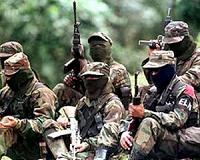
The government and FARC began a landmark ceasefire Monday, the first time both sides have put down their weapons since the Marxist guerrilla group was launched in 1964.
The conflict, which has drawn in various left- and right-wing armed groups and gangs, has left 260,000 dead, 45,000 missing and 6.9 million uprooted from their homes.
Efforts to launch peace talks with a smaller rebel group, the National Liberation Army (ELN), have yet to bear fruit.
