
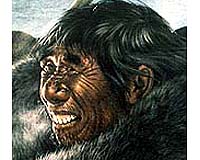
Climate – and not modern humans – was the cause of the Neanderthal extinction in the Iberian Peninsula. Such is the conclusion of the University of Granada research group RNM 179 – Mineralogy and Geochemistry of sedimentary and metamorphic environments, headed by professor Miguel Ortega Huertas and whose members Francisco Jose Jimenez Espejo, Francisca Martínez Ruiz and David Gallego Torres work jointly at the department of Mineralogy and Petrology of the University of Granada (Universidad de Granada) and the Andalusian Regional Institute of Earth Sciences (CSIC-UGR).
Together with other scientists from the Gibraltar Museum, Stanford University and the Japan Marine Science and Technology Center (JAMSTEC), the Spanish scientists published in the scientific journal Quaternary Science Reviews an innovative work representing a considerable step forward in the knowledge of human ancestral history.
The results of this multidisciplinary research are an important contribution to the understanding of the Neanderthal extinction and the colonisation of the European continent by Homo Sapiens.
During the last Ice Age, the Iberian Peninsula was a refuge for Neanderthals, who had survived in local pockets during previous Ice Ages, bouncing back to Europe when weather conditions improved.
Climate reconstructions
