
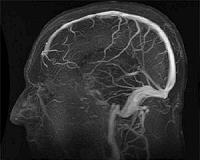
Even without knowing much about the different parts of the brain, the "cerebellum" just sounds necessary for survival. But after a woman in China came to the emergency room complaining of dizziness and nausea, doctors were flabbergasted to find the woman was missing the small but vital portion of the brain.
It's only the ninth time in all of human history a person has been found to be missing his or her cerebellum. Most previous cases were only discovered after the individuals died prematurely.
Doctors who treated the 24-year-old woman said the fact that she had survived for so long without this vital portion of her brain was remarkable. They relayed their discovery to researchers at the journal Brain; the case was briefly mentioned in the latest issue.
The cerebellum makes up only a small mass located at the back of the skull; but the tiny chunk holds more neurons than the entire rest of the brain combined, and it is key to motor skills, balance and many basic mental functions.
The young woman told doctors she didn't learn to speak until age six and only began walking at age seven — understandable for someone missing an essential component of the brain. Scientists surmise her cortex may have assumed some of the responsibilities of the missing cerebellum, but a limited amount of research suggests living without a cerebellum significantly reduces one's life expectancy.
It's likely a frightening prognosis for the young woman, but it will be a rare opportunity for scientists to study how the human brain adapts to such unusual and difficult circumstances.
"These rare cases are interesting to understand how the brain circuitry works and compensates for missing parts," Mario Manto, a neuroscientist at Free University of Brussels in Belgium, told New Scientist.
Brain inflammation may hinder memory
Washington DC (UPI) Sep 13, 2014 –
A new study that can be found in The Journal of Neuroscience reveals how brain inflammation affects memory.
University of California, Irvine neuroscientists Jennifer Czerniawski and John Guzowski placed rats in two similar environments but shocked the rats' feet in one of them. Once the rats learned which environment they would be shocked in and learned to avoid it, they were given a bacteria that stimulates brain inflammation.
A protein called cytokine was released in the rats' brains because of the inflammation, which resulted in the rats being unable to remember which environment would electrically shock them.
The kind of memory that was affected by the cytokine is known as "complex discrimination memory," which is the memory type that helps us differentiate between daily activities. The hippocampus region of the brain, also known for being the first place affected in the onset of Alzheimer's disease, was the main place affected in the study.
The scientists claim the memory was affected by the cytokines disrupting neuron connections that facilitate memory creation and recall. The researchers hope the findings could help future attempts to limit brain damage resulting from chemotherapy.
