
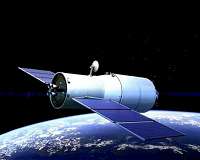
China's Tianzhou-1 cargo spacecraft and Tiangong-2 space lab completed their second in-orbit refueling at 6:28 p.m. Thursday.
The second refueling, lasting about two days, further tested the country's refueling technology and cemented technical results from the first refueling.
Tianzhou-1, China's first cargo spacecraft, was launched on April 20 from south China's Hainan Province, and it completed automated docking with the orbiting Tiangong-2 space lab on April 22.
The two spacecraft completed their first in-orbit refueling on April 27, at an orbit of 393 kilometers above the earth.
Since Tianzhou-1 and Tiangong-2 have become a combination, space science experiments and applications have been conducted.
According to the flight plan, Tianzhou-1 will fly around Tiangong-2 and then carry out a second docking.
China is the third country, after Russia and the United States, to master refueling techniques in space, which is crucial in the building of a permanent space station.
As the International Space Station is set to retire in 2024, the Chinese space station will offer a promising alternative, and China will be the only country with a permanent space station.
China's space station to help maintain co-orbital telescope
China will develop and launch a two-meter-caliber space telescope, which will share the same orbit with the country's future space station, said Yang Liwei, deputy director of China Manned Space Agency.
The telescope will dock with the co-orbital space station for refueling as well as maintenance and exchange, Yang revealed at the ongoing Global Space Exploration Conference (GLEX 2017) whi … read more
