
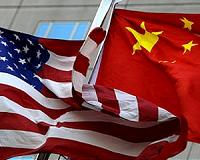
China warned the US that any deals reached during ongoing trade talks would be void if Washington went ahead with imposing tariffs on Chinese goods, as the latest round of negotiations ended on Sunday in Beijing.
The third round of trade talks between the world's two largest economies appeared to fall short of bridging the gap between Beijing and Washington, which are at loggerheads over Chinese trade and industrial policy practices that US President Donald Trump says kill American jobs.
"If the US introduces trade sanctions including tariff increases, all economic and trade achievements negotiated by the two parties so far will be void," said a Chinese government statement issued by the official Xinhua news agency.
The discussions in Beijing, led by US Commerce Secretary Wilbur Ross and Chinese Vice Premier Liu He, were intended to ease tensions after Washington said Tuesday it would follow through with tariffs on Chinese imports despite a truce reached between the two sides last month.
The consensus reached in Washington called on China to increase agricultural and energy imports from the US. Beijing said "positive and concrete progress" was made on those issues with details left for "both sides to finalise".
The visit from the large US delegation, with members from several executive branch agencies, came as fears of an all-out global trade war intensified after the European Union, Canada and Mexico drew up retaliatory measures to Washington's stinging steel and aluminium tariffs that went into effect on Friday.
On Saturday, Washington's main allies delivered a unified message of shock and dismay at a Group of Seven ministerial meeting, urging President Trump to rescind the punishing metal tariffs.
– Trade war fears –
The planned US trade sanctions on Beijing include restrictions on Chinese investment, export controls and 25 percent tariffs on $50 billion in tech goods.
The White House has said it would announce a final list of Chinese imports covered by the US tariffs on June 15, with the other measures to follow later this month.
Beijing warned all the commitments it had made so far were premised on "not fighting a trade war". China has also threatened to hit back with tit-for-tat tariffs on tens of billions of dollars in US goods.
But even as Beijing has maintained it will not back down, it has announced conciliatory measures like lowering tariffs on auto and consumer good imports to address some of the Trump Administration's concerns.
"Our meetings so far have been friendly and frank, and covered some useful topics about specific export items," Ross told the Chinese trade team led by Liu, President Xi Jinping's right hand-man on economic issues, on Sunday morning.
Ross and the large American delegation had dinner Saturday evening with their Chinese hosts.
"It has been a great pleasure to spend yesterday with you and we are especially grateful for last night's dinner," Ross said as he met with Liu at the Diaoyutai state guesthouse.
Washington's negotiating stance in the trade talks with Beijing has shifted as Trump's team of hardliners and more mainstream advisors compete to push their views.
Treasury Secretary Steven Mnuchin, who announced the tariff truce with China, said at the G7 summit in Canada that the US was pushing for "structural changes" to the Chinese economy.
"This isn't just about buying more goods. This is about structural changes," Mnuchin said Saturday.
"There are structural changes that allow our companies to compete fairly. By definition that will deal with the trade deficit," he added.
China 'regrets' EU challenge at WTO
Beijing (AFP) June 4, 2018 –
China voiced regret over the European Union's decision to lodge an intellectual property rights complaint at the World Trade Organization, just as Beijing is embroiled in a similar dispute with Washington.
The EU brought the challenge to the WTO on Friday, accusing Beijing of unfairly requiring foreign firms to hand over their technology to Chinese companies in order to do business in China.
"China expresses regret over the EU launching the complaint and will properly handle it according to the WTO dispute settlement procedures," China's Ministry of Commerce said in a statement published late Sunday.
"The Chinese government has always attached great importance to the protection of intellectual property rights and has adopted many powerful measures to protect the legitimate rights and interests of domestic and foreign intellectual property rights holders."
Foreign companies need to form joint ventures with local companies to do business in the massive Chinese market, which often involves sharing their technology and know-how.
US allegations that China steals company secrets are at the heart of the ongoing trade dispute between the world's two biggest economies.
Washington launched its own WTO challenge over alleged Chinese IP breaches on March 23.
The two countries have held a series of negotiations aimed at averting a trade war.
US Commerce Secretary Wilbur Ross and Chinese Vice Premier Liu He held talks at the weekend, which ended with Beijing warning that any deals would be void if Washington follows through on threats to impose massive tariffs on Chinese goods.
