
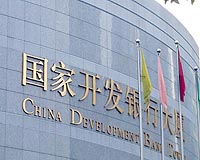
China said little when the G20 called for an end to "excessive" pay for top finance executives, who make far less here than in the West, but Beijing has been mulling how to handle the issue for months.
The government has said several times this year that it wants to reduce salary gaps in the 135 state-run companies under its direct control including banks, in the name of creating a more "just" society.
In April, the finance ministry ordered that 2008 pay for top executives at state financial institutions not exceed 90 percent of their earnings the year before — and should be less if their firms has suffered major losses.
The ministry has floated the idea of limiting the gross salary of banking bosses to 2.8 million yuan (410,000 dollars) a year — a far cry from the millions raked in by US and European counterparts even during the global crisis.
The plan has not yet been approved, but some observers say China's banking industry will be hard-pressed to attract top talent with the comparatively small compensation packages.
"That level of annual salary will not be enough to attract the top financial elite with ample experience in the overseas banking sector," said Liao Fei, an analyst at Adfaith management consulting firm in Shanghai.
"As long as they are making more contributions to the country, I think it's fair for them to earn more money," he said.
Before giving up his 2008 salary due to a catastrophic investment in the European financial group Fortis, Ma Mingzhe, the chairman of insurer Ping An, was one of the best paid men in China.
He earned 66.2 million yuan before tax in 2007 — 33 times what Yang Chao, the president of China Life, the nation's biggest life insurer by premiums, pocketed.
But Jiang Jianqing, the head of ICBC, the world's biggest bank by market capitalisation, was only paid 1.6 million yuan before tax last year, more than 40 percent of it in bonuses, according to the bank's annual report.
Jiang therefore earned around the same amount as Nicholas Moore, the chief executive of Macquarie Group, Australia's leading investment bank — once the latter's pay had been slashed by 99 percent due to a huge bank profit slump.
Before the massive salary cut, Moore earned 26.75 million Australian dollars (23.6 million dollars) in the fiscal year to March 2008.
And Jiang's 658,000-yuan bonus represents less than 10 percent of that received by a trader at French bank Societe Generale, which can reach 1.2-1.3 million dollars in a good year.
For one Western expert, who refused to be named, risk-taking is not widespread in Chinese banks — and pay packages reflect that.
"China is involved mostly in retail banking, and does not yet have some sophisticated financial products such as derivatives that can earn a lot of money," he said.
But "the disclosed remunerations do not include expense accounts and material benefits," he said — what Chinese media call the "invisible salary," which can include all-expenses-paid holidays.
Liao nevertheless said Chinese compensation packages with fixed salary and performance-based discretionary income cannot "compete with their Western counterparts in absolute value".
"Setting some restrictions on bank executives' remuneration is reasonable, but state-owned banks and commercial banks are in different situations, so we cannot adopt the policy of cutting at one stroke in dealing with them," he said.
Beijing-based economist Hu Xingdou said the size of pay packages was not that relevant, as if some executives "leave because of the salary limitation, they will easily be replaced."
He emphasised that companies did not necessarily need to recruit at the highest level like their Western counterparts, noting: "These state enterprises make enormous profits due to their monopolistic positions."
Hu, who is in favour of a "salary cap," said an eventual decision on the issue could "only come from the Chinese parliament".
"State goods are involved. The people must have the right to supervise," he said.
Share This Article With Planet Earth
