
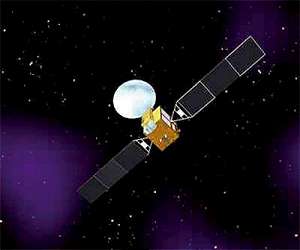
China successfully launched a satellite into space at 5:07 a.m. Beijing Time Friday, the 10th one of its indigenous global navigation and positioning network known as Beidou, or Compass system, the launch center said.
The satellite, launched from the Xichang Satellite Launch Center in the southwestern Sichuan Province, was boosted by a Long March-3A carrier rocket into a geosynchronous orbit.
It was also the 153rd launch of the Long March carrier rockets.
The basic structure of the Beidou system has now been established, and engineers are now conducting comprehensive system test and evaluation. The system will provide test-run services of positioning, navigation and time for China and the neighboring areas before the end of this year, according to the authorities.
More satellites will be launched before the end of 2012 for the Beidou network, and its coverage area will be expanded with upgraded services.
The global satellite positioning and navigation system will be completed in 2020 with 30 satellites orbiting the earth.
Started in 2000, the Beidou satellite navigation system is designed to break China's dependence on the U.S. Global Positioning System (GPS).
earlier related report
China completes over 30 pct of its space navigation program
Beijing (RIA Novosti) Dec 05 – China has launched its 10th navigation satellite into orbit as part of a project to develop its own global satellite navigation system, Xinhua news agency reported on Friday.
A Long March-3A carrier rocket carrying the Beidou or Compass navigation satellite took off at 5.07 a.m. Friday (local time) from the Xichang Satellite Launch Center in southwest China's Sichuan Province.
The agency said it was 153rd launch of the Long March carrier rockets.
By 2020, China plans to form a network of a total of 30 satellites, capable of providing global navigation service to users around the world.
Beidou currently provides navigation services within China and the neighboring regions. After completion, the project would become an equivalent of the U.S. Global Positioning System (GPS), Russia's Glonass, and Europe's Galileo.
Source: Source: Xinhua
Source: RIA Novosti
