
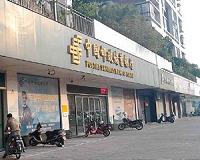
Postal Savings Bank of China (PSBC) launched an initial public offering in Hong Kong worth $8.1 billion on Tuesday, reports said, in what is expected to be the world's biggest flotation this year.
The Beijing-based lender is offering 12.1 billion shares at HK$4.68 to HK$5.18 each, according to Bloomberg, which said cornerstone investors would buy the majority of the stock.
The listing is expected be the biggest since that of Chinese Internet giant Alibaba in New York in 2014, which raised $25 billion.
PSBC is China's fifth-largest lender with 40,000 branches — more than any other bank in the country — and around 70 percent in rural areas.
Founded in 2007, it provides basic banking services to farmers and agricultural business owners, and it is the only financial institution present in some of the country's most remote regions.
According to the latest figures, PSBC's total assets reached 7.7 trillion yuan by March. Its net profit rose 11 percent year-on-year in the first quarter to 12.48 billion yuan.
"PSBC's earnings indicators such as profit and non-performing loan (NPL) ratios are better than other commercial banks in China," Dong Ximiao, senior economist and visiting fellow at Renmin University of China, told AFP.
But he added that the bank's low NPL ratios were due to it lending less, weakening its earnings capacity.
"The bank is trying to transform into a modern commercial bank using funds raised from the offering. But the task will be a challenging one," he said.
Previously completely state-owned, PSBC raised 45.1 billion yuan ($7 billion) by selling a 16.92 percent stake to 10 strategic investors in December, valuing the firm at $40.6 billion.
Among the buyers were e-commerce giant Alibaba's affiliate Ant Financial and Tencent, another internet behemoth.
PSBC: China's broadest bank by branches
Shanghai (AFP) Sept 13, 2016 –
State-owned Postal Savings Bank of China (PSBC)– China's broadest bank by branch numbers — on Tuesday launched an initial public offering in Hong Kong, aiming to raise as much as $8.1 billion in the world's biggest IPO this year, reports said.
Here are some facts and figures about the bank.
What does PSBC do?
Unlike other commercial banks, PSBC was born from within the China Post system in 2007 in an effort to boost financial services in rural areas of China.
It provides basic banking services, mainly savings deposit as its name implies, to farmers and agricultural business owners. It has more than 40,000 branches — more than any other bank in the country — with around 70 percent in rural areas, according to its website.
In some of China's most remote regions it remains the only financial institution present.
How many customers does it have?
PSBC says it has the widest client base among all banks in China, with 505 million individual customers as of the end of March, more than the combined populations of Indonesia and Brazil — the world's fourth and fifth most populous countries.
What is it worth?
According to the latest figures, PSBC's total assets reached 7.7 trillion yuan by March, making it the fifth largest bank in China.
Previously completely state-owned, it raised 45.1 billion yuan ($7 billion) by selling 16.92 percent stake to 10 strategic investors in December, valuing the firm at $40.6 billion.
The buyers included e-commerce giant Alibaba's affiliate Ant Financial and another internet behemoth Tencent, as well as UBS Group bank and Singapore's Temasek Holdings.
They paid 3.89 yuan per share.
At the top of the reported IPO price range of HK$4.68-HK$5.18 they will have made a 15 percent profit.
PSBC's net profit rose 11 percent year-on-year in the first quarter to 12.48 billion yuan.
Will the IPO be a success?
Analysts said PSBC's offering "shouldn't be too bad".
"The current market sentiment is cautious but tilting slightly towards optimistic. Its IPO shouldn't be too bad as PSBC has its own advantages," Dong Ximiao, senior economist and visiting fellow at Renmin University of China, told AFP.
"PSBC's earnings indicators such as profit and non-performing loan (NPL) ratios are better than other commerical banks in China."
But he pointed that the bank's low NPL ratios were due to it lending less, weakening its earnings capacity.
"The bank is trying transform into a modern commercial bank using funds raised from the offering. But the task will be a challenging one."
