
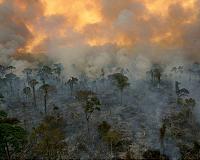
Roman Catholic leaders in the Amazon basin region on Monday condemned Brazilian President Michel Temer's decree opening up swaths of untouched rainforest to mining companies.
The Ecclesial Pan-Amazonian Network, a church body covering the region, said it joined other Catholic organizations and indigenous tribes in the targeted area of northern Brazil to "publicly reject the anti-democratic announcement" scrapping a vast nature reserve on August 23.
"The opening of the area for mineral exploration of copper, gold, diamond, iron, niobium, among others, will increase deforestation, irreparable loss of biodiversity and negative impacts on people throughout the region," a statement said.
Temer's decree removed a previous ban on private companies exploiting the Renca reserve, which covers more than 17,800 square miles (46,000 square kms) in the northern Para and Amapa states. Temer says this was part of a program to boost Brazil's weak economy and that vital areas within the reserve will remain off protected.
However, Greenpeace, the World Wildlife Fund, Brazilian supermodel Giselle Bundchen and now the Catholic Church have slammed the decision as giving in to pressure from big business, while sacrificing the so-called "lungs of the world."
"It is enough to observe the destruction that Brazilian and foreign miners have left in the Amazon in the last decades, with deforestation, pollution and water resources being compromised by the high consumption of water for mining," the church statement said.
It also predicted that mining companies would bring "increased violence, drugs and prostitution, escalation of conflicts over land, (and) uncontrolled aggression against the cultures and lifestyles of indigenous and traditional communities."
Arsenic in Pakistan groundwater 'alarmingly high': study
Levels of arsenic in the groundwater of eastern Pakistan are "alarmingly high" and pose a significant health hazard to tens of millions of people who drink the water, researchers said Wednesday.
The study in the journal Science Advances is the first to create a comprehensive map of arsenic in the groundwater across Pakistan, and follows earlier, smaller studies that showed high arsenic level … read more
