
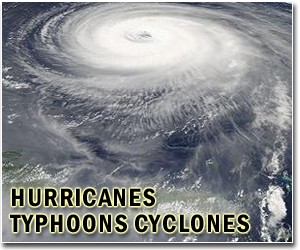
Tropical Storm Igor formed Wednesday in the eastern Atlantic and took aim for the Caribbean, prompting the government of Cape Verde to place its citizens on alert.
A bulletin from the Miami-based National Hurricane Center said the government of Cape Verde had issued a tropical storm watch for southern islands in the group, including Maio, Sao Tiago, Fogo and Brava.
As of 1500 GMT, Igor was about 95 miles (155 kilometers) southeast of the southernmost Cape Verde Islands, packing sustained winds of 40 miles per hour (65 kilometers per hour) and moving slowly west.
"On the forecast track, the center of Igor should pass south of the Cape Verde Islands by tomorrow," the NHC report said, adding that "slow strengthening" would occur in the coming days.
Igor comes hot on the heels of Tropical Storm Hermine, which came ashore in northeastern Mexico on Monday and caused widespread flooding before petering out as it crossed the border into the southern US state of Texas.
Hurricane Earl, the biggest Atlantic storm of 2010 — which gained category four status at its height — whipped up heavy winds last week along the east coast of the United States and Canada.
Earl weakened dramatically after making landfall in Canada on Saturday as a category one hurricane but still knocked out power to nearly one million people in Nova Scotia.
earlier related report
Tropical storm brings heavy rain to central Japan
Tokyo (AFP) Sept 8, 2010 –
Torrential rains in central Japan flooded rivers and disrupted public transport systems on Wednesday as Typhoon Malou was downgraded to a tropical depression.
The government issued evacuation advisories for areas of heavy rains and likely flooding, as well as warnings for continued heavy rains, high waves and possible landslides.
Two men were rescued in the evening after being trapped on a river bank of the flooded Sakawa river in Kanagawa prefecture, south of Tokyo, as muddy water swept away trees and vehicles parked nearby.
Heavy rains disrupted train schedules and temporarily shut down highways.
Malou made landfall late Wednesday morning, cutting across the country from the Sea of Japan (East Sea) to the Pacific throughout the afternoon, bringing heavy rains particularly to areas southwest of Tokyo.
The rains temporarily halted trains in areas near Tokyo, including the "shinkansen" bullet trains that link the capital to the western commercial hubs of Nagoya and Osaka.
Share This Article With Planet Earth
