
When a mission to Mars is being developed, mission planners must consider many factors. Space technology advances, scientific needs and objectives, how to deal with distance, communications delays, and landing through the thin Martian atmosphere-all this must converge into a useful, workable mission concept.
Canadian companies and researchers are part of an international drive to respond to these and other challenges.
Today, the Canadian Space Agency announced the funding of five teams selected to develop their Mars mission concept proposals. Each team is entitled to a maximum of $250,000 to develop the concept of a scientific mission to Mars, including its moons.
Team members are scientists at universities and companies across Canada and their technologies and concepts include:
+ A radar satellite to study the geology of Mars
+ A rover to search for water erosion and subsurface water that uses a retractable sky camera to see around obstacles
+ An orbiter to study the composition and climate of the Martian atmosphere
+ A nanosatellite to map Mars' remnant magnetic field in the south
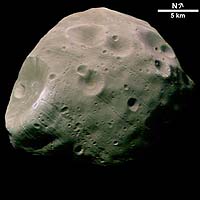
+ A mission to learn more about the origin, composition, and structure of Phobos, one of Mars' two moons
