
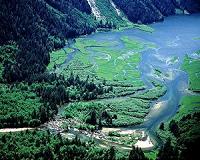
Decades of protests and then negotiations that brought together loggers, natives and environmental activists resulted Monday in a landmark deal to protect a huge swath of forest on Canada's Pacific coast.
The agreement to ban logging in 85 percent of the Great Bear Rainforest and put an end to a commercial trophy hunt in the region for a rare white Kermode bear was announced by the government of British Columbia.
The Great Bear Rainforest covers 6.4 million hectares from Quadra Island to Alaska.
The remaining 15 percent of the ancient forest will be subject to the most stringent standards in North America for commercial logging.
The deal was also ratified by 26 aboriginal tribes that live along the Canadian province's coast, several environmental groups, and five foresty companies.
It applies a novel approach to conservation that recognizes the full array of interactions within an ecosystem, including humans.
"Ecosystem-based management is the modern term which describes what we have always believed and practiced: If we use our traditional knowledge to take care of our lands, waters and resources they will take care of us," explained Coastal First Nations chief Marily Slett.
"Our vision for the future is one where ecosystems and potential developments in the Great Bear Rainforest are in balance," she said.
US flooring firm fined $13 mn for timber trafficking
Washington (AFP) Feb 1, 2016 –
A US flooring retailer that used timber harvested in the habitat of Siberian tigers and other endangered species was sentenced Monday to pay a record criminal fine over illegal trafficking.
Lumber Liquidators was sentenced to pay $13.2 million dollars in a federal court in Virginia, the US Justice Department said in a statement.
The department noted it was the largest financial penalty for timber trafficking under the Lacey Act, a law that bans trafficking in illegal wildlife and plant products.
Lumber Liquidators will pay $7.8 in criminal fines, $1.23 million in community service payments and nearly a million dollars in forfeited assets for its illegal importation of hardwood flooring.
Much of the illegal imports were manufactured in China from timber that had been illegally logged in Russia's Far East, in the habitat of the last remaining Siberian tigers and Amur leopards in the world, the department said.
"By knowingly and illegally sourcing timber from vulnerable forests in Asia and other parts of the world, Lumber Liquidators made American consumers unwittingly complicit in the ongoing destruction of some of the world's last remaining intact forests," said Dan Ashe, director of the US Fish and Wildlife Service, in the statement.
"Along with hastening the extinction of the highly endangered Siberian tiger and many other native species, illegal logging driven by the company's greed threatens the many people who depend on sustainable use of these forests for food, clean water, shelter and legitimate jobs," he said.
The sentencing came after Lumber Liquidators pleaded guilty last October with one felony count of importing goods through false statements and four misdemeanor violations of the Lacey Act.
