
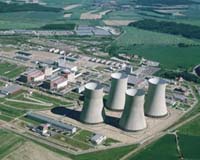
Canada will likely use nuclear power to feed its booming Alberta oil patch, which needs large amounts of energy to produce oil to export, Natural Resources Minister Gary Lunn told Sun Media Thursday. "It's not a question of if, it's a question of when in my mind," Lunn told the Canadian newspaper chain. "I think nuclear can play a very significant role in the oil sands. I'm very, very keen."
"It's absolutely emission free. It's CO2 free," he said. "On this specific file, I've had discussions this week."
A spokeswoman in his ministry told AFP she could not elaborate on Lunn's comments.
At an estimated 179 billion barrels, Canada's oil sands rank second behind Saudi Arabia in petroleum reserves. However, due to high extraction costs, the deposits were long neglected, except by local companies.
While crude is pumped from the ground, oil sands must be mined and bitumen separated from the sand and water.
Since 2000, skyrocketing crude prices and improved extraction technology have persuaded several foreign companies to invest billions of dollars in projects.
Oil sands production is expected to continue climbing to 3.5 million barrels per day by 2015, the Organisation for Economic Co-operation and Development said in its annual report in June.
But a government environmental audit released in September found the oil patch, already Canada's worst polluter, would also double its harmful greenhouse gas emissions by then.
Lunn said he believes nuclear power could replace natural gas and other fossil fuels now burned to help extract bitumen from the oil sands, suggesting Atomic Energy of Canada would partner with an oil company to build a reactor.
But, the plan provoked concern from oil companies over the high cost of building a reactor and from environmentalists wary of nuclear power as a panacea to fight global warming.
Source: Agence France-Presse
