
If we hope to return astronauts to the Moon in the future, we need to carry out a lot of preparations. Sure, NASA and other agencies are working on hardware that could take us there. But we also need to investigate the potential impact of the Moon on the astronauts themselves. Biological studies of the lunar environment have barely been carried out.
It's obvious that astronauts can survive there for short periods, but we need more research into the long-term effects of living on the Moon.
A good way to advance our knowledge of the biomedical influence of the Moon would be to send a biosatellite there. This would be a small capsule spacecraft, filled with living specimens, which would fly to the Moon and return to Earth. The simplest way to run a biological package to the Moon would be to launch one on a circumlunar mission.
This would involve flying out to the Moon, passing around the lunar farside, and returning straight to Earth. The mission would only last a few days, but it would expose its samples to the radiation of deep space.
Short exposure times would be enough to produce some effects on sensitive tissues, and the results could be compared to those from longer missions. This would help in modeling the cumulative effects of exposure to radiation and other conditions of the lunar environment.
Later missions would enter orbit, and spend progressively longer periods at the Moon. It would be interesting to see the effects of a major burst of radiation on such a mission, although it would be difficult to predict exactly when such an event would take place.
Landing a package on the lunar surface would need to be accomplished as the final step. Partial gravity, as well as the potentially different radiation environment, could produce different results to a mission in near-lunar space.
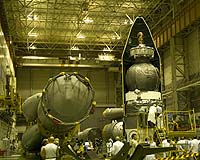
Biosatellites have been flown regularly by Russia, using Foton capsules that resemble modified versions of the historic Vostok spacecraft. These spacecraft normally carry a variety of experiments in different areas, not all of them biological.
A Foton capsule could be modified to survive a lunar journey. It would require a stronger heatshield and a souped-up propulsion system. It would also need a fairly strong launch vehicle to send it Moonwards.
An unmanned lander with return capability is more complex, but achievable. Russia flew unmanned sample-return missions in the 1970s, and teams around the world, both public and private, are currently working on a new generation of robot landers.
Adding a return stage to these vehicles would be straightforward. At the very least, any biological experiment landed on the surface should endure a whole day-night cycle on the Moon, to expose it to all potential angles of solar and cosmic radiation.
Share This Article With Planet Earth
