
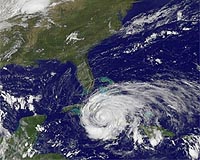
The southern Bahamas was picking up the pieces Monday after Hurricane Ike blasted the chain of islands, forcing residents into shelters, damaging infrastructure and jeopardizing thousands of protected flamingos.
The Bahamas' southernmost Great Inagua island suffered a direct hit with homes destroyed, government buildings severely damaged and power and telephones knocked out for the island's 1,000 residents, the National Emergency Management Agency said in a post-storm briefing.
Hurricane Ike lashed the Turks and Caicos Islands late Saturday as an "extremely dangerous" Category 4 storm, reportedly causing massive damage on the British colony before unleashing its fury Sunday on the Bahamas and roaring west to traumatize Cuba.
Bahamas Prime Minister Hubert Ingraham, who was expected to tour Great Inagua Monday or Tuesday, put on a brave face as the island began to dig out from the damage.
"We are very pleased that the building codes have held up quite well, especially with a Category 4 hurricane, and that the people in the community have followed the necessary advisories," he said during the briefing televised from the capital Nassau.
"We have been spared a major, major disaster," he said, adding that no fatalities had been reported.
Other islands in the southern Bahamas such as Mayaguana, Acklins and Crooked Island were also affected but experienced less devastating damage.
One concern is the fate of the largest breeding colony of West Indian flamingos in Inagua National Park — a major tourist attraction which reported extensive damage.
The Bahamas National Trust says the large pink birds — numbered at 50,000 in the park — were pushed to the edge of extinction 40 years ago due to hunting and habitat destruction but have rebounded after Inagua's wetlands and parts of other islands were set aside to protect the species.
