The power of Earth and beyond.
Energy Daily Editorial Team
Editorial Team

Energy Daily Editorial Team

Editorial Team

The Energy Daily Editorial Team produces Energy Daily's coverage of the global energy industry. We report on oil and gas, power grids and utilities, energy markets and policy, and the renewables and storage reshaping how the world is powered. Articles reflect our team's collective editorial process, source verification, drafting, technical review, and editing, rather than a single writer's work. Energy Daily takes editorial responsibility for content under this byline. For more on how we work, see our editorial policy.

Legacy Reports

Russia’s Stroytransgaz Completes Gas Pipeline In Greece

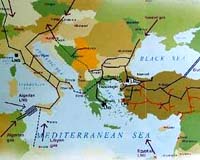
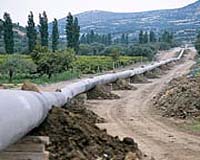
Moscow (RIA Novosti) Aug 28, 2007 - Russian pipeline-building company Stroytransgaz said Monday it had finished constructing a short natural gas pipe section in Greece, which extends an existing route from Alexandroupolis to Turkey. The new 53.7-kilometer (33-mile) section runs northwest from the city to Komotini. The new addition is a continuation of a pipeline built by Stroytransgaz in 1996-2000, and provides a link between the gas supply networks of Greece and Turkey, the company said.

Legacy Reports

Carnegie Mellon Researchers Look At Fossil Fuel Impacts

Pittsburgh PA (SPX) Aug 27, 2007 - A team of Carnegie Mellon University researchers report that the choices U.S. officials make today could limit how the nation's future energy needs are met and could cost consumers billions in idle power plants and associated infrastructure systems. In the upcoming Sept. 1 edition of the journal Environmental Science and Technology, Carnegie Mellon researchers Paulina Jaramillo, W. Michael Griffin and H. Scott Matthews show that liquefied natural gas (LNG) imported from foreign countries and used for electricity generation could have 35 percent higher lifecycle greenhouse gas emissions than coal used in advanced power plant technologies.

Legacy Reports

Analysis: Is Azeri oil blessing or curse

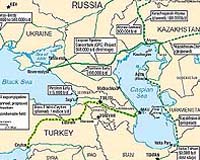
Washington (UPI) Aug 24, 2007 - The 1991 collapse of the Soviet Union opened up the newly independent republics to the global economy, which has most notably been interested in their hydrocarbons. The clear winners in the race to develop Caspian energy reserves are Azerbaijan and Kazakhstan. While Kazakhstan is a relative newcomer to the international energy market, Azerbaijan has been producing oil since the 1870s and is the sole post-Soviet state to have diversified its export routes beyond Russian control.