
France faces daunting questions on how to advance its strategic priorities in Europe and the Indo-Pacific, after traditional allies the US, UK and Australia teamed up without it.
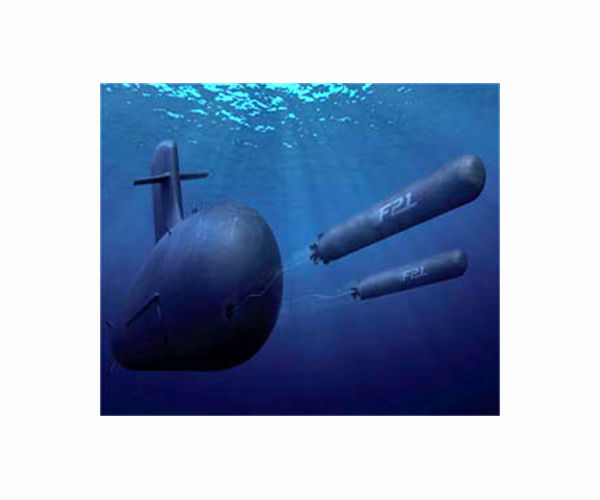
Although the three countries' announcement of a defence alliance has caused shockwaves across Europe, France has been particularly stung because a multibillion-dollar deal to supply Australia with a submarine fleet has now been ripped up.
The US will instead supply Australia with a nuclear-powered fleet — provoking a blunt reaction from France.
Foreign Minister Jean-Yves Le Drian said the submarine deal was a "stab in the back" from Australia and accused the administration of US President Joe Biden of "unilateral, sudden and unforeseeable" behaviour that recalled the Donald Trump era.
"The decision could prompt a rethink in Paris about strategic partnerships with the anglosphere," said Herve Lemahieu, research director at Australia's Lowy Institute.
Since 2018, Macron has pursued diplomatic, military and trade ties across the Indo-Pacific, helped by France's territories of New Caledonia and French Polynesia.
It has deepened defence relations with Japan as well as India, with New Delhi recently buying 36 Rafale fighter jets from France.
France has no desire to see itself and other European nations sidelined as US President Joe Biden moves more aggressively to counter Beijing's regional ambitions.
Yet Paris was told only at the last minute that Australia would team up with Washington to secure nuclear-powered subs.
It marks only the second time the US has shared the game-changing technology with another country, after Britain.
– 'Big blow' –
Anne Cizel, a specialist in American foreign policy at the Sorbonne university in Paris, said the row was a "minor diplomatic crisis".
"The United States is sending a curious message, in that it wants European allies present in the Indo-Pacific, and at the same time it is now the main rival for French submarines sales," she said.
"It confirms the fact that the United States expects its allies to remain docile, and is no longer interested in consultation," said Thomas Gomart, director of the French Institute of International Relations (IFRI).
Protective of its own atomic sovereignty, France had no intention of selling nuclear subs to Australia, analysts said.
That effectively ruled out any participation by Paris in the new AUKAS pact.
The alliance also shows other Indo-Pacific players that Europe will not be a major force to be reckoned with if the military stakes with China get higher.
"We can have a role in times of peace for preventing a conflict, but the day when conflict comes Europeans won't have the capacity, and they won't for several years still," said Antoine Bondaz at France's Foundation for Strategic Research (FRS).
"It's a very big blow," Bondaz said, but one that shouldn't stop Macron from imploring EU allies to realise the importance of ensuring free access to the Indo-Pacific and its key global shipping lanes.
Macron has repeatedly said that Europe needs to develop its own defence capabilities to be less reliant on the US. But such a vision will need the strong support of Germany, which faces political uncertainty as Chancellor Angela Merkel exits power in this month's elections.
"Paris should look for other partnerships, with Indonesia or South Korea for example," said Bondaz.
"Australia remains a key partner in the South Pacific, and you can't change geography."
US says consulted Paris on Australia deal but livid France says no
Washington (AFP) Sept 16, 2021 –
The White House said Thursday that US officials held high-level talks with Paris before announcing a deal in which Australia scrapped French submarines, but a livid France insisted it was taken by surprise.
"Senior administration officials have been in touch with their French counterparts to discuss AUKUS, including before the announcement," the official told AFP after the announcement of the three-way alliance involving the United States, Australia and Britain in which Canberra will acquire US nuclear submarines.
"I will leave it to our Australian partners to describe why they sought this new technology," the official said.
"We cooperate closely with France on shared priorities in the Indo-Pacific and will continue to do so," the official added.
But a French embassy spokesman denied there had been consultations.
"We had not been informed before the first news of this deal was published in the American and Australian press, a few hours before Joe Biden's official announcement," the spokesman said.
The AUKUS agreement scuppered Australia's multi-billion-dollar 2016 deal to buy submarines from France, which had been personally backed by President Emmanuel Macron.
France's foreign minister branded the new agreement "a stab in the back."
"I'm very angry today, and bitter… This is not something allies do to each other," Jean-Yves Le Drian said.
China condemned the deal as an "extremely irresponsible" threat to stability in the region.
EU 'not informed' on US, UK and Australia alliance
Brussels (AFP) Sept 16, 2021 –
The EU complained on Thursday it was kept out of the loop on a new military partnership between the US, UK and Australia, as Brussels laid out its own strategy for the Indo-Pacific.
Washington, London and Canberra unveiled the alliance on Wednesday in what was seen as a move to counter China's rising might.
The announcement has fuelled fears that Europe is being cut out by Washington, with EU capitals still smarting over the way the US handled the withdrawal from Afghanistan.
The agreement to provide a nuclear submarine fleet to Australia sparked fury in EU member France, which saw its earlier multi-billion dollar deal with Canberra scrapped.
"We regret not having being informed, not having been part of these talks," EU foreign policy chief Josep Borrell said.
"I understand how disappointed the French government will be."
But he insisted that ties with Washington had still improved dramatically since President Joe Biden replaced Donald Trump.
The new alliance between the US, Britain and Australia — dubbed AUKUS — overshadowed Borrell's own announcement detailing a new Indo-Pacific strategy for the EU.
"The AUKUS security partnership further demonstrates the need for a common EU approach in a region of strategic interest," European Council chief Charles Michel wrote on Twitter, adding that EU leaders would discuss it at a meeting in October.
The 27-nation bloc is looking to strengthen ties in the vast region where it says it is "already the top investor, the leading development cooperation partner and one of the biggest trading partners".
Part of the plan would include "exploring ways to ensure enhanced naval deployments by EU Member States to help protect the sea lines of communication and freedom of navigation", a statement said.
The could anger China, which denied a request from a German frigate to make a port call in Shanghai this week.
But Borrell insisted the strategy was "one of cooperation, not confrontation" with China.
The statement appeared aimed at drawing a line between the EU and Washington's approach of pressing its allies to take an increasingly tough approach towards China in the region.
Borrell said Australia's decision to turn its back on France in favour of the American-British pact would not harm EU ties with Canberra as the two sides look to negotiate a free trade deal.
"We want to foster cooperation with countries such as Australia," Borrell said.
"Trade agreements with Australia will continue down their path."
