
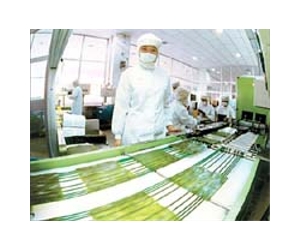
For two years, Li has toiled at an auto parts plant affiliated with Honda Motor, earning meagre pay and breathing workshop fumes that he and his fellow workers fear are affecting their health.
Such tales seem as numerous as the workers themselves in southern Guangdong province — long known as the "workshop of the world" but now the focus of a push for better pay and conditions by China's masses of low paid labourers.
"We are breathing poisonous fumes all day long, we want better monitoring in the workshop and thorough health checks. The factory must take responsibility," said Li, 26, who declined to give his full name, fearing he'd be fired.
"We make barely 10 yuan (1.50 dollars) an hour, while auto workers in Japan or the United States make up to 50 times more."
Workers like Li, who is from a poor farming community in rural Guangdong, are the raw muscle behind China's rise as an industrial power, but they say they are being exploited by foreign manufacturers and their own government.
Simmering anger — voiced to AFP by factory workers across the industrial city of Foshan — suggests a continuation of labour troubles that have some warning China's days providing the world with cheap goods may be numbered.
The Foshan Fengfu Auto Parts factory where Li works in a welding shop, and which makes exhaust systems for Japan's Honda, was one of several Guangdong factories whose workers went on strike in recent weeks.
The rare strikes crippled production by Honda, which makes up to 650,000 vehicles a year in China. Honda eventually raised wages, but they remain barely enough to survive on without working for overtime pay, said Li.
Li now gets a monthly salary of 1,500 yuan (220 dollars) — a rise of 300 yuan — but must use it to pay for housing, food, and other expenses.
It's simply not enough, Li said, adding nothing was done about the heat and fumes workers endure and for which they demanded hazard pay.
China's ruling Communist Party government has publicly backed better pay and working conditions, and wages have been raised at a number of factories in response to labour unrest.
But many workers say authorities are denying them truly fair working conditions, fearing it could scare off foreign investment.
"The government wants to keep wages from rising. They fear that if we are too successful other factories will be pressured by workers to offer higher wages," Li said.
At the nearby Foshan Honda Auto Parts Company, one of the first parts suppliers hit by a strike, workers said the 24-percent pay rise to 1,900 yuan a month that they got was far below what they demanded.
They expressed anger over their state-controlled union's role in negotiations. China's unions have long been accused of ignoring workers rights and interests, and siding with management in collective bargaining sessions.
"The union has never represented our basic interests," said one worker who asked not to be identified.
"We don't know who our union representative is, how he got appointed, or why he was negotiating for us."
Premier Wen Jiabao last week called China's more than 200 million migrant workers "the glory of the nation," and pledged to do more to protect their interests — talk that is dismissed in Foshan.
"The government always speaks nice words, but they have always worked against our interests," Li said.
"We feel exploited, our goal is to protect our interests and ensure our basic living standards."
Many acknowledge working conditions and benefits like health and retirement insurance have improved in recent years, but say wages have not kept pace with inflation.
Staff turnover in Foshan factories, awash with young migrant workers — many in their late teens and early twenties — is huge due to the low wages and difficulty saving any money, they say.
"The main attitude of factory management is that if you don't like the pay, then other workers can replace you," said a worker surnamed Chen at the overseas-funded Ichikoh Valeo Auto Lighting Systems Company, in Foshan.
"If you cause trouble, you are fired."
On May 18, employees at Ichikoh Valeo went on strike after the factory introduced a third work shift — eliminating the overtime work they desperately needed to pad the plant's 1,000-yuan monthly basic salary, he said.
He said the plant agreed to increase basic salaries to 1,300 yuan, but that did not make up for the lack of overtime.
Chen, 30, said workers at the factory had gone on strike eight times in the five years he had worked there, with the other strikes resulting in an increase in the monthly wage of less than 100 yuan.
"The strikes have never been successful," he said.
Share This Article With Planet Earth
