
The leader of NATO's fight against insurgents in Afghanistan warned on Thursday that tough resistance there was due not just to the ousted Taliban but also to the Al-Qaeda network and powerful drug barons funding the conflict.
"There is a tendency to characterize all of the violence in Afghanistan as a resurgence of the Taliban. This is inaccurate," General James Jones, NATO's supreme commander in Europe, told an international security body here.
As well as the Taliban, who have this year fiercely renewed an insurgency against foreign forces after being driven from power by a US-led coalition in 2001, Jones said "the remnants of Al-Qaeda" were also operating in Afghanistan.
The Al-Qaeda network and its leader Osama bin Laden were blamed for the deadly attacks in the United States on September 11, 2001. These provoked the United States to target the Taliban whom it accused of harbouring bin Laden.
In addition, Jones said, today's insurgents are "certainly" boosted by "the strong presence of the drug cartels which have their own infrastructures, their own export system, their own security system, and are feeding the opposition".
Jones was addressing the permanent council of the Organisation for Security and Cooperation in Europe, based in the Austrian capital.
"We are seeing an increased connection between the Taliban and criminal elements that are drawing their economic nourishment from the narcotics cartels," he said.
He claimed that 50 percent of Afghanistan's gross domestic product came from the narcotics trade.
United Nations officials have previously warned that the trade generated by Afghanistan's opium poppy harvests was harming the country, which is marred by violence and corruption, particularly in the restive south.
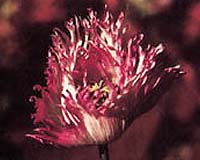
The head of the UN office on drugs and crime, Antonio Maria Costa, this week called for NATO forces to destroy the burgeoning opium industry in southern Afghanistan. The country accounts for 90 percent of the world's opium supply.
Source: Agence France-Presse
