
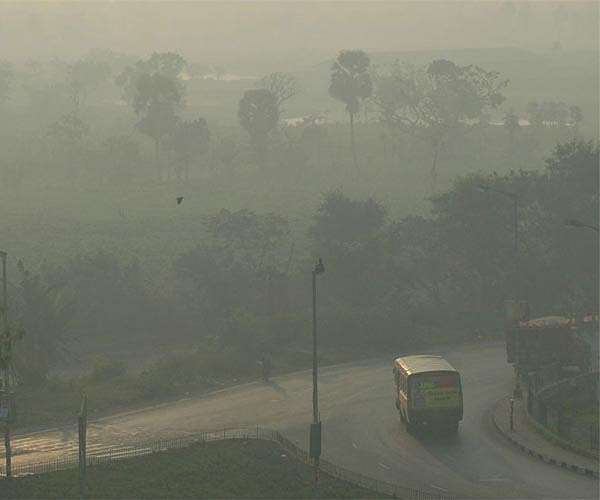
Air pollution costs the Middle East and North Africa $141 billion per year, or around 2% of GDP on average, the World Bank said Monday, urging a green post-Covid-19 recovery for the region.
Environmental pollution will cost some nations in the region including Egypt, Lebanon and Yemen more than 3% of their GDP, it said a report.
"Productivity falls if residents cannot work after they or their family members fall ill from air pollution, and health care costs can be a substantial burden on both individuals and governments," said the report.
The average resident will be ill for 60 days in his lifetime due to air pollution, with town dwellers breathing in 10 times the level of pollutants considered safe by the World Health Organization, it said.
The report singled out "low environmental standards" in the transportation and industry sectors, the use of low quality fuel, and burning waste as the main drivers of air pollution in the region.
The Mediterranean is one of the most plastic-polluted seas in the world, it said, adding that the average resident dumps more than six kilogrammes (13 pounds) of waste into its waters each year.
The Mediterranean has "as much plastic flowing into it each year as the volume of fish taken out from the two most commonly caught species", the report said.
Sea pollution drives coastal erosion, a major threat to livelihoods, especially among the poor, it said.
In countries that rely on tourism for revenue such as Tunisia, coastal erosion could cost the country up to 2.8% of its GDP.
"Polluted skies and seas are costly to the health, social and economic wellbeing of millions of people in the Middle East and North Africa region," said Ferid Belhaj, World Bank vice president for the region.
"As countries recover from Covid-19, there is an opportunity to change course and choose a greener, bluer and more sustainable growth path," he said.
Dubai to charge for single-use plastic bags
Dubai (AFP) Feb 7, 2022 –
Dubai is ending the free distribution of single-use plastic bags in a drive towards more sustainable practices for the glitzy emirate known for its unbridled consumerism.
From home deliveries to supermarkets and shops, single-use plastic bags are ubiquitous across the emirate.
"In line with enhancing environmental sustainability and encouraging individuals to reduce the excessive use of plastics, the Executive Council of Dubai has approved the policy to limit single-use bags by imposing a tariff of 25 fils (about $0.07) on single-use bags," the authorities said.
The decision will come into force at the start of July in shops, restaurants, pharmacies and for home deliveries.
The emirate vowed that this is the first step of a strategy planned over several stages, aimed at completely banning single-use plastic bags within two years.
"With sustainability becoming a global priority, changing the behaviour of the community to reduce the environmental footprint of individuals is crucial to preserve natural resources and environmental habitats," the authorities said.
In March 2020, Abu Dhabi, the capital of the United Arab Emirates, announced its "new environmental policy" aiming to eliminate single-use plastics by 2021 — but regulations have yet to be applied.
This comes as the UAE prepares to host the COP28 global environmental conference in 2023, having set a target to become carbon neutral by 2050, in line with goals set by the COP26 conference in Britain last year.
Like much of the region's countries, the UAE's economy is principly reliant on fossil fuels.
Its neighbour Saudi Arabia — the region's heavyweight and the world's largest exporter of crude oil — targets carbon neutrality by 2060.
