
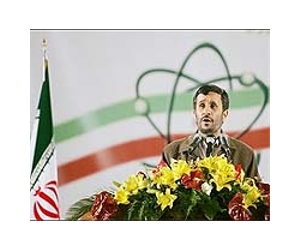
The UN Security Council has become an "oppressive tool" of world powers that is nearing its end, Iranian President Mahmoud Ahmadinejad charged on Sunday in an interview on state television.
"The (UN) Security Council is a tool in the hands of the big powers," Ahmadinejad said.
"World powers use it as an oppressive tool … The way they (world powers) acted (in imposing sanctions on Iran) shows the end of the Security Council," he said.
In a fresh outburst against the Security Council for imposing a new round of sanctions on Iran, the hardliner said the UN body had failed to resolve any key world issues, "be it Iraq … or Afghanistan."
"When flotillas carrying aid get attacked in international waters, the council does not react, but at the same time it passes a resolution against us," he said, referring to Israel's commando raid on aid ships headed for Gaza.
The May 31 raid left nine pro-Palestinian activists dead and sparked widespread outrage.
On Wednesday, the Security Council imposed a fourth set of sanctions against Iran over its controversial nuclear programme, which world powers suspect masks an atomic drive, a charge denied by Tehran.
earlier related report
EU's Ashton invites Iran for nuclear talks
Luxembourg (AFP) June 14, 2010 –
EU foreign affairs chief Catherine Ashton has written to Iran's chief nuclear negotiator Saeed Jalili inviting him to talks as Europe plans new sanctions against Tehran over its nuclear programme.
"I have written to Mr Jalili… inviting him to meet with me to now discuss nuclear weapons issues and to take forward the twin-track approach," the carrot of dialogue and the stick of sanctions, Ashton said as she arrived for talks in Luxembourg with EU foreign ministers.
Tehran has long said that it accepts in principle to hold such a meeting between Jalili and Ashton.
Ashton wrote her letter as the European Union considers going further than the new sanctions meted out on Iran by the UN Security Council, particularly in the key sector of the oil industry, with prohibition of new investment, transfers of technologies, equipment and services.
The assembled EU ministers were set to agree Monday on exactly what areas should be hit, so that EU heads of state and government can formally endorse them at a summit in Brussels on Thursday.
The details would then be decided in July.
Last Wednesday the UN Security Council slapped its fourth set of sanctions on Iran over suspicions that it is seeking to develop nuclear weapons.
Tehran insists that its nuclear programme is purely for civil energy uses.
The new UN measures authorise states to conduct high-sea inspections of vessels believed to be ferrying banned items to Iran and add 40 entities to a list of people and groups subject to travel restrictions and financial sanctions.
Share This Article With Planet Earth
