
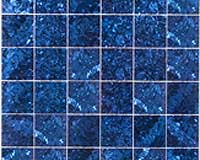
Advent Solar has announced that it has successfully expanded its Ventura Technology manufacturing capability across all silicon types, including multi-crystalline, mono-crystalline and UMG. As the industry's first comprehensive cell-to-module architecture, Advent Solar Ventura Technology now provides solar photovoltaic (PV) manufacturers with maximum flexibility in their approach to the market.
Manufacturers will be able to select the silicon solution that will best address their customers' price and performance needs.
"The silicon-based photovoltaic solar industry is trapped in a cycle of providing decreasing efficiency gains, while at the same time increasing development costs," said Fares Bagh, vice president of engineering and technology for Advent Solar.
"Advent Solar is focused on shattering this conventional approach by attacking the problem from a holistic system perspective. We achieved a significant milestone by developing a scalable manufacturing process that can produce high-efficiency solar cells using mono-crystalline, multi-crystalline and low-cost UMG silicon wafers. This allows us to provide manufacturers with best-in-class capabilities and the flexibility they need to offer differentiation across a broad span of market needs."
Cell Efficiency Milestones
With its new capabilities, Advent Solar has achieved superior cell efficiencies at industry-leading costs:
+ 18.2% on mainstream 156mm mono-silicon wafers;
+ 17.2% on 156mm multi-crystalline wafers; and
+ 16.56% on 156mm UMG wafers
These results have been validated via round robin tests at Fraunhofer, NREL and Sandia Labs.
"The solar industry today is debating which technology will dominate in the long term: silicon PV or thin film," said Peter Green, president and CEO of Advent Solar.
"Currently, silicon PV still dominates the market, although thin film has made significant gains. The market, however, will need both technologies to span the range of solar applications from residential rooftops to field-based systems. The latest advancement in Ventura Technology with the lowest-cost silicon type – UMG, provides a capability that bridges the gap between thin-film costs and silicon PV efficiencies by hitting the industry target of $1/watt at the cell level with excellent performance."
Advent Solar achieved its cell-efficiency milestones by leveraging its Emitter-Wrap Through (EWT) back-contact technology, which is part of the Ventura solar architecture. EWT eliminates grid obstruction, while still using cost effective fabrication processes and solar-grade materials, such as mainstream mono-silicon and UMG wafers. EWT cells are designed to provide high efficiency with the lowest-cost potential.
Manufacturers licensing Ventura Solar Technology intellectual property will be in a position to sustain efficiencies gained at the cellular level, as the cells are placed into modules. Ventura Solar Technology cells are designed to be used with Monolithic Module Assembly (MMA), a fully-automated module assembly process that applies proven semiconductor-style manufacturing techniques. This unique combination is designed to maximize module energy output with minimal interconnect resistance.
Share This Article With Planet Earth
