
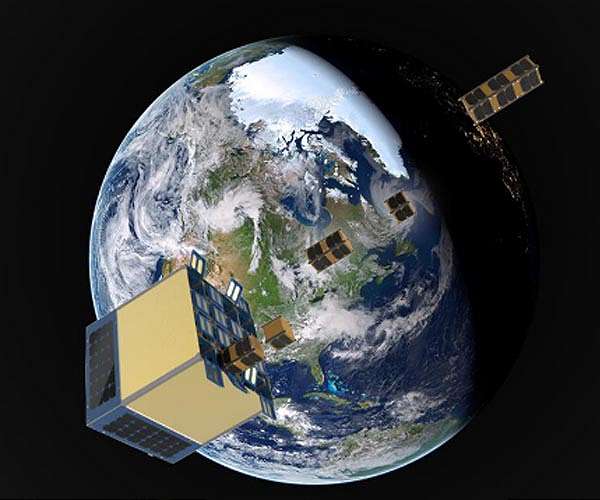
SpaceCloud once again headed into orbit as a part of D-Orbit's ION Satellite Carrier onboard SpaceX's Transporter-3 mission that was launched January 13th from Cape Canaveral, Florida. The mission aims to verify 17 apps, uploading of new ones, and support the on-orbit testing of a hyperspectral camera.
On this mission SpaceCloud hosts 17 evolved applications, and we are now having the ability to upload new applications while in-orbit. Additionally, SpaceCloud is now connected to a hyperspectral electro-optical instrument developed by VTT. Having this sensor onboard gives commercial customer applications and third-party services access to satellite images in real-time directly in space.
This is a huge step forward in the multipurpose usage of satellites enabling new business models where anyone with an app can start charging for the time it is used by other actors. Valuable data can hold information about, for example, precision agriculture, natural disasters, traffic, or bush fires.
On our first mission with D-Orbit in June 2021, SpaceCloud was launched for the first time from Cape Canaveral with SpaceX. In that mission, we successfully verified 23 SpaceCloud applications, proving that cloud-based solutions on Earth also work in Space.
The first mission was a great success with a 100% successful verification of all 23 apps onboard. We are now looking forward to verifying even more sophisticated apps and using the breakthrough technology where we actually can upload commercially feasible apps directly into orbit. A perfect start to a new year, says Anders Blomberg, CEO Unibap.
This launch supports the work that lies as a foundation for future users adopting SpaceCloud into their missions. It reduces risks and enables further test and development for the continued use of SpaceCloud.
