
In 1994 the European Space Agency (ESA) developed a phased Lunar programme leading to the long-term goal of creating an infrastructure for utilising and developing the Moon whilst preserving Lunar assets.
The first step in this ESA initiated programme is a unique project
called 'Euromoon 2000' which is currently being studied by ESA
engineers/ scientists and key European Space Industries. The project is
intended to celebrate Europe's entry into the New Millennium; and to
promote public awareness and interest in science, technology and space
exploration.
Euromoon 2000 has an innovative and ambitious implementation plan. This
includes a 'partnership with industry' and a financing scheme based on
raising part of the mission's budget from sponsorship through a dynamic
public relations strategy and marketing programme.
The mission begins in earnest with the small (approx. 100 kg) LunarSat
orbiter satellite, to be designed and built by 50 young scientists and
engineers from across Europe. Scheduled for launch in 2000 as a
secondary payload on a European Ariane 5 rocket, it will then orbit the
Moon, mapping the planned landing area in greater detail in preparation
of the EuroMoon Lander in 2001. The Lander's 40 kg payload allocation
will accommodate amongst others scientific instrumentation for in-situ
investigation of the unique site. Elements of specific support to the
publicity and fund-raising campaign will also be considered.
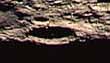
The Lander will aim for the 'Peak of Eternal Light' on the rim of the 20
km-diameter, 3 km-deep Shackleton South Pole crater – a site uniquely
suited for establishing a future outpost. This location enjoys almost
continuous sunlight thus missions can rely on solar power instead of
bulky batteries or costly and potentially hazardous nuclear power
generation. As a consequence of the undulating South Pole terrain there
are also permanently shadowed areas – amongst the coldest in the Solar
System resulting in conditions highly favourable for the formation of
frozen volatiles (as suggested by the Clementine mission in 1994).
Earlier this year NASA launched its Lunar Prospector
satellite which is currently performing polar lunar orbits surveying
areas of the moon's surface rarely documented in previous missions.
The data now being received back from Prospector strongly suggests the
presence of the suspected volatiles (water ice?). Understandably the
presence of billions-of-years-old frozen water in proximity to
Euromoon's planned landing site would provide a tremendous boost for the
implementation of the EuroMoon project now in its 10th month of study.
The in-situ analysis of such rare substances will provide an invaluable
scientific window back in time (the Moon is believed to have been formed
over 3.5 billion years ago from elements of the earth's mantel). The
water's constituent elements of hydrogen and oxygen have also the
possibility of offering an essentially free supply of rocket propellant
and oxygen for exploitation during future activities. EuroMoon is the
only mission being studied that can investigate this ice in-situ, while
the US satellite will remain in a orbit.
The mission is particularly challenging because of the required landing
precision (within 100 m2) in terrain varying between +6 km and -5 km in
altitude. Achieving the required pinpoint touchdown capability would
allow the future exploitation of other interesting sites. One such site
is the 6 km-high Malapert Mountain, 120 km from the pole from which the
Earth can always be seen thus allowing continuous communications with
the home planet for any future outpost in the region. The 'Peak of
Eternal Light' (described above) is in direct view of Malapert, the twin
peaks offer the tantalising possibility of both of uninterrupted power
and communications.
Euromoon can be seen as be the initial step in founding the first
extraterrestrial outpost, founding the infrastructure for a 'robotic
village' controlled by a 'virtual community' of Earth-based operators
using telescience. This would indeed mark the beginning of an expansion
of the human domain beyond Earth without the risk or cost of manned
space travel. This concept also forms an essential element of the
fund-raising campaign which will create an exciting media opportunity
involving all levels of society.
Mission costs will be minimized by using existing hardware and a rapid
schedule. Industrial partners would share risk and responsibility of
realising the mission by forming the EuroMoon Company. A new marketing
and advertising consortium has been formed with the specific task of
raising funds through diverse commercial activities.
EuroMoon 2000 was chosen by ESA's Long-term Space Policy Committee as
the candidate for the Millennium Celebration and presented to the
Agency's Council in December 1997. A progress report, as well as a
programme proposal will be presented to the March Council and a final
decision is expected in June next.
