
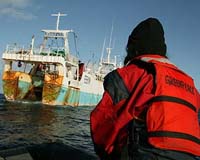
A new report by The Worldwide Fund for Nature (WWF) accuses international high seas fishing organisations of failing to prevent over-fishing and its attendant "fish laundering".
The document, published as signatory countries to the United Nations Agreement on Fish Stocks prepare for their meeting in New York next week, is a study of the world's 16 Regional Fisheries Management Organisations (RFMOs). It concludes that the RFMOs, some of which have been operating since the 1920s, "have generally failed to prevent over-exploitation of fish stocks" and have allowed marine eco-systems to decay.
Some members of the Northwest Atlantic Fisheries Organisation (NAFO) "have ignored quotas and unilaterally set their own," the report says.
It also accuses some members of the RFMO responsible for tuna fishing of regularly exceeding their quotas.
Moreover, according to the report these organisations have failed to prevent "fish laundering": the process, akin to money laundering, whereby catches that exceed legal quotas are brought back onto the legal market.
Fish launderers use a strategy that is "very hard to trace back", according to Simon Cripps, head of the WWF's maritime programme. They discharge their catch in ports where controls are not too strict, he explains, and then reload it onto other ships sailing under other countries' flags.
