
Several countries have said they will monitor the wastewater from flights originating from China in response to an explosion of Covid-19 cases across the nation.
While the measure will not prevent the spread of the virus, it will give a glimpse into the scale of China's outbreak and whether new variants are emerging there.
– How does it work? –
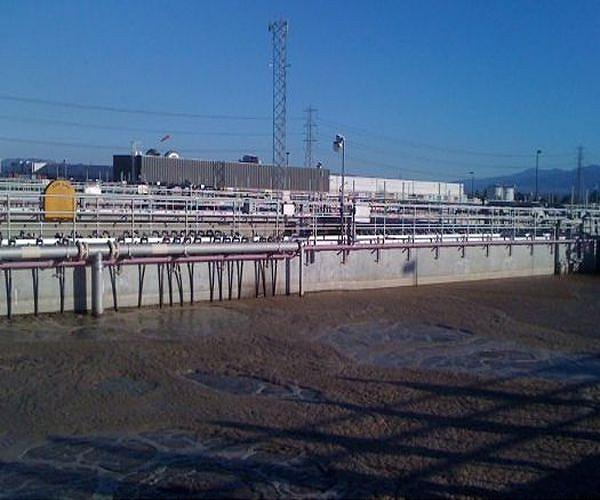
The process involves examining the mixture of urine and faeces from the toilets of flights that have arrived from China.
The wastewater can then be analysed to discover roughly what percentage of the passengers have Covid, as well as the particular variants.
Local authorities collect the wastewater directly after the aircraft lands and send it to laboratories for testing.
Once the virus has been detected, its genome is sequenced to find out if it is a known subvariant.
Wastewater can also be collected from an entire airport, but this makes it impossible to determine which country the samples originated from.
– Which countries? –
Belgium, Canada, Austria and Australia are among the countries that have already indicated they will test the wastewater of planes coming from China.
The European Union is expected to follow suit after a majority of national health ministry officials on Tuesday recommended stepping-up wastewater monitoring.
The United States is also considering the measure, according to US media reports.
– Why? –
Infections have soared in China since last month when it started lifting its strict zero-Covid measures, in place since the start of the pandemic.
Several countries including the US have said they require passengers arriving from China to provide negative Covid tests, sparking Beijing's ire.
Unlike such tests, monitoring wastewater would not bar people currently positive for Covid.
However, "these samples offer a window into what is currently happening in China," said Antoine Flahault, director of the Institute of Global Health at the University of Geneva.
This could be particularly important with "doubts about the transparency and diligence of the official health information coming from the Chinese government," he told AFP.
The World Health Organization on Wednesday criticised Beijing's "very narrow" definition of Covid deaths and said China's official statistics "under-represent" hospital admissions and deaths in the country.
– Less invasive –
Monitoring wastewater could help fill the breach, said Flahault.
"Knowing that 30 to 50 percent of passengers from China are currently infected is useful, in the absence of reliable figures," he said.
It also allows countries to find out about possible new variants that could change the trajectory of the pandemic, like Omicron did in late 2021.
Health experts have warned that the explosion of cases among China's 1.4 billion population could provide a fertile breeding ground for new strains.
Monitoring wastewater is much easier to carry out — and far less invasive — than testing arriving passengers at the airport.
The European branch of the International Airports Council lobbying group, which has lashed out on screening passengers from China, has instead called for increased wastewater surveillance.
– Limitations –
While examining wastewater "works remarkably well" however, it does not give an "exhaustive view" of the infections or variants onboard the plane, French virologist Vincent Marechal told AFP.
One limitation is that wastewater can only monitor those passengers who used the toilet during the flight.
It also takes days to collect, test, sequence and analyse the findings, which can not be broken down by individual passengers.
This offers few avenues to quickly act on the results.
"Once you have the information, what can you do with it? Call back all the people who were on the plane?" asked Marechal.
"It is interesting, but is already too late for the measures that one can take."
Who has imposed Covid rules on travellers from China?
Beijing (AFP) Jan 5, 2023 –
More than a dozen countries have slapped fresh travel regulations on travellers from China, as the world's most populous nation faces a surge in Covid cases following its decision to relax strict virus restrictions.
Here is a run-down of the places that have imposed mandatory Covid tests and other rules on arrivals from China, which Beijing has condemned as "unacceptable".
– United States –
From Thursday, the United States will require negative Covid tests taken within two days of departure — or documentation proving passengers have recovered from the virus within the past 90 days — for all entries from China.
Acceptable tests include "a PCR test or an antigen self-test administered and monitored by a telehealth service or a licensed provider", according to the US Centers for Disease Control.
The rules include those travelling from Hong Kong and Macau.
– European Union –
Also from Thursday, all those arriving in France from China must present a negative PCR test result, or a rapid antigen test, that was taken less than 48 hours before their flight.
Italy and Spain have also imposed Covid test requirements.
The bloc said this week it "strongly encouraged" member states demand Covid tests from passengers coming from China and that arrivals are screened for the virus.
– Australia
Australia is also requiring travellers from China — including Hong Kong and Macau — to provide a negative Covid-19 test before arrival, citing a "lack of comprehensive information" from Beijing about the outbreak.
– Canada –
Canada is asking travellers arriving from China to show a negative Covid test taken no more than two days before their departure.
– United Kingdom –
From Thursday, all travellers to the UK from China must submit a negative test before boarding.
The UK government also said it would test "a sample of arrivals" to monitor for new variants.
– Israel –
Israel is requiring Covid tests on foreigners intending to travel from China, with a screening centre set up to test arrivals who volunteer.
– Japan –
Japan was one of the first countries to impose new rules on arrivals from China, requiring them to submit a negative Covid test.
Those who test positive will be quarantined for seven days at designated facilities and Tokyo will also cap flights coming from mainland China.
From Sunday, Japanese authorities will also test travellers from China on arrival.
– Taiwan –
The self-ruled island of Taiwan — which China claims as its territory — has imposed testing requirements too, with state news agency CNA reporting that travellers from the mainland will be asked to undergo a saliva-based screening upon arrival.
– South Korea –
South Korea has also taken steps to screen travellers from China, requiring them to provide a negative Covid test before and after arrival.
Travellers from Hong Kong and Macau are included in the rules, which will also require all arrivals to take a Covid-19 test on their first day in South Korea.
– Ghana –
Ghana has become one of the first African countries to impose restrictions on travellers from China.
Its foreign ministry said that, from Friday, all arrivals from China must provide a negative test taken before departure as well as submit to mandatory screening for the virus.
– India –
India requires travellers from China and a spate of other Asian countries to provide a negative Covid test taken within 72 hours of departure.
– Qatar –
Qatar is asking all travellers from China to present a negative PCR result taken within 48 hours of departure, the Gulf state's health ministry has said.
Those who are infected on arrival "must undergo health isolation", state news agency QNA reported.
– Morocco –
The north African nation has taken some of the strictest measures, banning entry outright for all travellers from China.
The ban took effect on Tuesday and will last until further notice, "in order to avoid a new wave of contaminations in Morocco and all its consequences", its foreign ministry said.
