
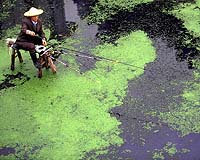
Russian scientists have registered pollution potentially harmful for humans in the Amur river on the border between Russia and China following a blast in a northeast China benzene factory last year, a fishery official said Tuesday.
Scientists in Russia's far eastern Khabarovsk region caught fish on Monday with bleeding ulcers in the Amur, said German Novomodny, the head of the local branch of an official fisheries research center.
The fish are being analyzed to determine precisely which substance poisoned them, but it is likely to be the result of benzene poured further upstream after the blast in the Chinese factory, Novomodny said.
A concentration of heavy metals exceeding the norm for human consumption has already been found in the fish, the region's deputy environment minister Sergei Andrienko said.
On November 13, a blast ripped through a PetroChina benzene factory in China's northeastern Jilin province.
As a result, an 80-kilometer-long (50-mile) slick of benzene surged down the Songhua river into the city of Harbin, leaving up to four million people without public water services.
The Songhua (known as Sungari in Russia) feeds into the Amur, and provides the main source of drinking water for the 600,000 residents of the Russian city of Khabarovsk, across the border from China.
Traces of pollution were found in the Amur in December but tests found they presented no danger for humans.
Source: Agence France-Presse
