
Two senior US delegations held direct talks Tuesday with officials from North Korea as a diplomatic drive to persuade the Stalinist regime to give up its nuclear weapons entered a crucial phase. Finance experts from the two nations met in Beijing to discuss a drawn-out dispute over US sanctions on the North that the cash-strapped nation has said must be resolved before it will consider surrendering its nuclear arms.
They met for three hours on the sidelines of six-nation talks aimed at convincing North Korea to disarm, which resumed only on Monday after a 13-month suspension caused by Pyongyang's objections to the sanctions.
Daniel Glaser, the US Treasury Department's deputy assistant secretary for terrorist financing and financial crimes, said in Beijing that discussions were scheduled to continue Wednesday at the North Korean embassy in the Chinese capital.
"We think these discussions are a good opportunity for us to have an initial exchange of views," he said.
"If these talks are to be really productive it has to be a long-term process by which we all work to address the underlying concerns we have expressed in the past."
The restart of the talks came after North Korea conducted its first-ever atomic test on October 9. Kim Jong-Il's regime celebrated the test as a major national achievement but the detonation triggered international condemnation.
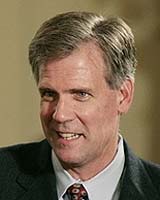
As the financial teams huddled down in Beijing Tuesday, the chief US and North Korean envoys to the six-nation forum met separately for their first formal face-to-face encounter since the talks restarted.
But US envoy Christopher Hill said there was no breakthrough to report after a bilateral meeting with the North's representative.
"We don't have any breakthrough to report. We had a substantive discussion. We will meet again tomorrow," he told reporters late Tuesday.
"I would say, without revealing elements of their positions, there was certainly a willingness to listen to some of our ideas," he said.
But Hill added that the six-nation forum needed to push on.
"We do feel the real sense that our six-party process needs to do more than forming working groups and to talk about process," he said.
"I think we need to engage in progress and find a way to move forward on our goal of denuclearization. I think we need to show some progress. I am not ready today to announce any, but I tell you we worked hard today."
Japan's envoy said North Korea's stance remained "far apart" from that of its counterparts in the six-nation talks.
"Our basic stances remain far apart. At this point, I cannot say that the outlook is optimistic," Kenichiro Sasae told reporters Tuesday night.
North Korea had returned to the forum in a defiant mood on Monday with its chief envoy Kim Kye-Gwan outlining a long list of demands he said must be met before it would consider scrapping its nuclear arms.
Under the US sanctions, 24 million dollars belonging to North Korean leader Kim Jong-Il and other members of his ruling elite have been frozen in a Macau bank over allegations of counterfeiting and money laundering.
Aside from unfreezing those funds, Kim said that United Nations sanctions imposed on North Korea in October after its test must also be lifted.
Kim further demanded that North Korea be given help in building a nuclear reactor for power needs and that the US policy of "hostility" against it must be dropped.
North Korea pulled out of the six-nation talks — which include the United States, China, Russia, South Korea and Japan — in November 2005 in protest at the US financial sanctions.
Two months earlier that year it had agreed to scrap its nuclear program in return for security guarantees and aid.
Many observers saw the North's decision to pull out as just a stalling tactic while it continued to develop its nuclear arsenal.
The United States had previously maintained the sanctions must not be brought into the six-party forum, insisting they were a law enforcement issue unrelated to the North's nuclear program.
But following the nuclear test, Washington agreed to discuss the sanctions in the forum.
China, which remains North Korea's closest ally despite being angered over the nuclear test and supporting the UN sanctions, on Tuesday called for all sides in this week's talks to show more patience.
"The meeting is only two days old. We suggest that participants in the talks have patience. Maybe they should do some marathon exercises to build up their endurance," foreign ministry spokesman Qin Gang said.
earlier related report
No breakthrough in North Korea talks: US envoy
Beijing (AFP) Dec 20 – The US envoy to six-nation talks on dismantling North Korea's nuclear weapons program said Tuesday there was no breakthrough to report from a bilateral meeting with the North's representative.
"We don't have any breakthrough to report. We had a substantive discussion. We will meet again tomorrow," Christopher Hill told reporters in Beijing after the first formal face-to-face meeting between the envoys since the talks restarted.
"I would say, without revealing elements of their positions, there was certainly a willingness to listen to some of our ideas. I think they want to reserve their position as they listen to what we have to say today (Tuesday)," he added.
But Hill said the six-nation forum, which reconvened after a 13-month hiatus and the North's internationally condemned October 9 nuclear bomb test, needed to push on.
"We do feel the real sense that our six-party process needs to do more than forming working groups and to talk about process," he said.
"I think we need to engage in progress and find a way to move forward on our goal of denuclearization. I think we need to show some progress. I am not ready today to announce any, but I tell you we worked hard today."
Finance experts from the two nations also met in Beijing to discuss a drawn-out dispute over US sanctions on the North that the cash-strapped nation has said must be resolved before it will consider surrendering its nuclear arms.
The US expert Daniel Glaser said discussions were scheduled to continue Wednesday at the North Korean embassy in Beijing.
"We think these discussions are a good opportunity for us to have an initial exchange of views," he said.
"If these talks are to be really productive it has to be a long-term process by which we all work to address the underlying concerns we have expressed in the past."
The US imposed the financial sanctions in 2005 for alleged counterfeiting and money laundering. The North's atomic bomb test earlier this year led to UN sanctions.
earlier related report
Outlook for NKorea nuke talks 'not optimistic': Japanese envoy
Beijing (AFP) Dec 19 – North Korea's stance remained "far apart" from that of its counterparts in six-nation talks on dismantling Pyongyang's nuclear arms as a second day of negotiations ended, Japan's envoy said Tuesday.
"Our basic stances remain far apart. At this point, I cannot say that the outlook is optimistic," Kenichiro Sasae told reporters Tuesday night after a long day of discussions on the dispute.
Two senior US delegations held direct meetings Tuesday with officials from North Korea, the first face-to-face talks between the two sides during the current round of negotiations in Beijing.
Host China later held an evening banquet for all participants in the talks, which also include South Korea and Russia.
Sasae said Tuesday's gatherings had helped to "focus the discussions" but added that North Korea needs to adjust its position for the talks to progress.
Pyongyang's envoy Kim Kye-Gwan began the talks by declaring that North Korea would not disarm until sanctions against it were lifted.
These included both United Nations economic sanctions imposed as punishment for North Korea's October 9 nuclear weapon test and separate US financial sanctions.
"I hope that North Korea will consider today's talks and take a more forward-looking stance," Sasae said.
Source: Agence France-Presse
