
President Recep Tayyip Erdogan on Saturday said Turkey would not look "positively" on Sweden and Finland's NATO bids unless its terror-related concerns were addressed, despite broad support from other allies including the United States.
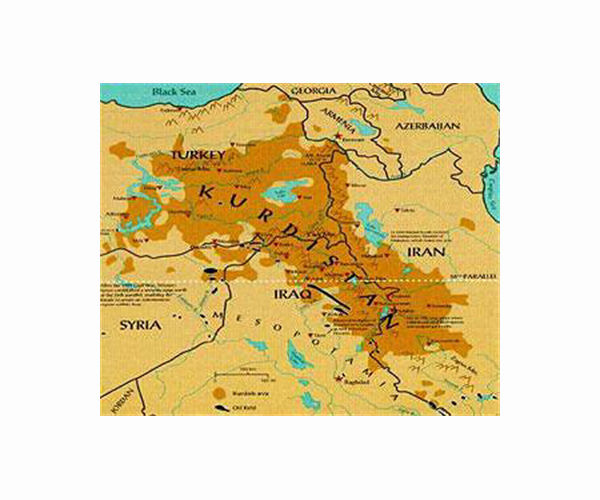
Turkey has long accused Nordic countries, in particular Sweden which has a strong Turkish immigrant community, of harbouring outlawed Kurdish militants as well as supporters of Fethullah Gulen, the US-based preacher wanted over the failed 2016 coup.
Erdogan's threat throws a major potential obstacle in the way of membership for the hitherto militarily non-aligned Nordic nations since a consensus is required in NATO decisions.
"Unless Sweden and Finland clearly show that they will stand in solidarity with Turkey on fundamental issues, especially in the fight against terrorism, we will not approach these countries' NATO membership positively," Erdogan told NATO chief Jens Stoltenberg in a phone call, according to the presidency.
On Twitter, Stoltenberg said he spoke with Erdogan "of our valued ally" on the importance of "NATO's open door".
"We agree that the security concerns of all allies must be taken into account and talks need to continue to find a solution," he said.
On Thursday, Stoltenberg said Turkey's "concerns" were being addressed to find "an agreement on how to move forward".
– 'Concrete steps' –
Erdogan, who refused to host delegations from Sweden and Finland in Turkey, held separate phone calls with the two countries' leaders on Saturday, urging them to abandon financial and political support for "terrorist" groups threatening his country's national security.
He told Swedish Prime Minister Magdalena Andersson that "Sweden's political, financial and arms support to terrorist organisations must end", the presidency said.
Turkey expected Sweden to "take concrete and serious steps" that show it shares Ankara's concerns over the outlawed Kurdistan Workers' Party (PKK) and its Iraqi and Syrian offshoots, Erdogan told the Swedish premier, according to the presidency.
The PKK has waged an insurgency against the Turkish state since 1984 and is blacklisted as a "terrorist organisation" by Turkey and Western allies like the European Union — which includes Finland and Sweden.
Russia's invasion of Ukraine in February has shifted political opinion in both Nordic countries in favour of joining the Western military alliance.
Membership requires the consent of all 30 existing members but Turkey is putting a spanner in the works.
Washington Institute fellow Soner Cagaptay said Turkey appeared more favourable to Finland joining NATO than Sweden.
"Ankara is signaling it will greenlight Helsinki's accession to the alliance, but block membership for Stockholm — unless Sweden delivers concessions" on the PKK, he added.
Sweden and Finland, while solidly Western, have historically kept a distance from NATO as part of longstanding policies aimed at avoiding angering Russia.
But the two nations moved ahead with their membership bid in shock over their giant neighbour's invasion of Ukraine, which had unsuccessfully sought to join NATO.
– 'Incompatible' –
Erdogan also told Andersson to "lift restrictions imposed on Turkey in the defence industry" after the army's Syria operation in 2019.
Andersson tweeted that Sweden looked "forward to strengthening our bilateral relations, including on peace, security, and the fight against terrorism".
In another phone call with Finnish President Sauli Niinisto, Erdogan said turning a blind eye to "terror" organisations posing a threat to a NATO ally was "incompatible with the spirit of friendship and alliance".
Erdogan also said it was Turkey's natural right to expect respect and support for its "legitimate and determined struggle against a clear threat to its national security and people", according to the presidency.
In return, Niinisto praised "an open and direct phone call" with Erdogan.
"I stated that as NATO allies Finland and Turkey will commit to each other's security and our relationship will thus grow stronger," he tweeted.
"Finland condemns terrorism in all its forms and manifestations. Close dialogue continues."
Swedish and Finnish leaders were on Thursday welcomed by US President Joe Biden, who strongly backed their bid to join NATO.
Biden said "Finland and Sweden make NATO stronger", and offered the "full, total, complete backing of the United States of America".
US 'deeply concerned' on UN rights chief China visit
Washington (AFP) May 20, 2022 –
The United States on Friday voiced alarm at UN rights chief Michelle Bachelet's upcoming visit to China, complaining of a lack of access and her reticence to address the rights of Xinjiang's Uyghur community.
"We're deeply concerned about the upcoming visit," State Department spokesman Ned Price told reporters.
"We have no expectation that the PRC will grant the necessary access required to conduct a complete, unmanipulated assessment of the human rights environment in Xinjiang," he said, using the acronym for the People's Republic of China.
Price also criticized Bachelet, a former president of Chile, for not releasing a report on Xinjiang, where the United States says Beijing is carrying out "genocide" against the mostly Muslim Uyghurs and other Turkic-speaking people.
"Despite frequent assurances by her office that the report would be released in short order, it remains unavailable to us and we call on the high commissioner to release the report without delay and not to wait for the visit," Price said.
He condemned her "continued silence in the face of indisputable evidence of atrocities in Xinjiang and other human rights violations and abuses throughout the PRC."
"It is deeply concerning," he said, as Bachelet should be a "leading voice on human rights."
Witnesses and rights group say more than one million people have been detained in indoctrination camps in Xinjiang that aim to destroy the Uyghurs' Islamic culture and forcibly integrate them into China's Han majority.
Beijing denies genocide and says it is offering vocational training to reduce the allure of Islamist extremism.
