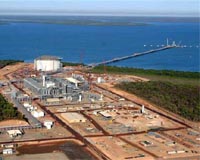
Trinidad and Tobago's prime minister said he looked at the economic data and his country's reserves and decided now is the time to send Jamaica natural gas.
Prime Minister Patrick Manning addressed T&T's House of Representatives last Wednesday on the country's economy and, more importantly, the difference between T&T's and other countries in the Caribbean.
Things aren't as rosy in some of those other countries — Manning pointed out that unemployment in the Organization of Eastern Caribbean States ranged from 15 percent to 25 percent — and if those other islands can't provide a quality of life their citizens want, "that is likely to lead to mass migration into the areas where they feel a better way of life might be available," Manning said.
"Trinidad and Tobago has had to take a long and hard look at the economies of some of these countries to see what contribution we can make at this time to their economic well-being."
As part of this plan Manning resurrected a proposal for T&T to sell liquefied natural gas to Jamaica. The countries had an agreement regarding natural gas in 2004, but Port of Spain withdrew, citing a lack of supply.
What has changed, Manning told legislators, is the global economic downturn has reduced demand for liquefied natural gas, and advancements in regasification have increased the economic feasibility for Jamaica to be on the receiving end of T&T's shipments.
"In those circumstances, the government of Trinidad and Tobago now considers that a supply of LNG to Jamaica for the stimulation of investments in the alumina sector to be a matter of national priority," Manning said.
That is the other side of the coin. Port of Spain is looking to widen its economic base with an alumina smelter — still to be built but very much in the planning stages with $400 million in Chinese credit helping it along. It is expected to be in operation by 2011.
Trinidad and Tobago relies on natural gas and oil for 40 percent of its gross domestic product and 80 percent of its exports. The oil part of that equation is shrinking.
The U.S. State Department Web site points out that Port of Spain has made the switch from an oil-based economy to one based on natural gas. T&T is the world's No. 5 supplier of LNG and is the single largest supplier of the commodity to the United States. Two-thirds of the LNG entering the United States originates in Trinidad and Tobago.
As solid as a trading partner the United States is, Port of Spain is looking to diversify the market.
Manning is also hoping that Jamaica, which has abundant reserves of alumina, will look to Trinidad and Tobago as a customer of choice when T&T's alumina smelter comes online. Then Port of Spain will export aluminum, too.
This could also help Jamaica, since it closed its alumina production company in May. It could be shuttered for a year. Cheap fuel in the form of Trinidadian natural gas could allow for that facility to reopen sooner.
Share This Article With Planet Earth