
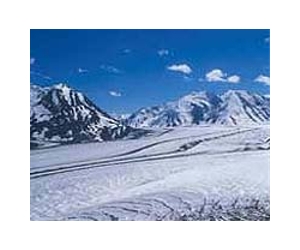
Tajikistan faces potentially calamitous food and water shortages unless action is taken to mitigate the effects of climate change, including rapidly retreating glaciers, Oxfam warned on Wednesday.
The British charity said the Central Asian country's glaciers in the Pamir Mountains are in retreat and one and a half million people were already suffering food insecurity after years of drought.
"Entire swathes of the rural population of Tajikistan have already suffered greatly in recent years, barely able to feed their families," Oxfam Tajikistan director Andy Baker said as the report was published in Dushanbe.
"Imagine what their situation will be in 2050 if adaptation measures are not put into place soon and if global green house gas emissions are not adequately reined in. It could be calamitous."
With Tajikistan already locked in a diplomatic standoff with neighbouring Uzbekistan over precious water supplies, Baker warned of a "dangerous ripple effect" across the region as states fight for their share of resources.
Uzbekistan — which provides for over 95 percent of Tajik energy imports — fears a mega new dam being built by Tajikistan will dry up water supplies to its cotton fields.
The Oxfam report, entitled "Reaching Tipping Point? Climate Change and Poverty in Central Asia" said there has already been a rise by some 1.0-1.2 degrees Celsius in parts of the country over the past 60 years.
Some 20 percent of the country's glaciers have retreated and up to 30 percent more are likely to retreat or disappear by 2050, it said.
Oxfam said more should be done to improve access to water and methods of food storage and preservation as well as provide more support and training in agriculture.
But also, international "negotiations must get straight back on track to achieve a fair, ambitious, and binding deal to tackle climate change, which is now overdue," it said.
A predominantly Muslim nation of 7.5 million, Tajikistan is the poorest state in the former Soviet Union.
Devastated by civil war in the 1990s, its economy is heavily reliant on remittances sent by expatriate workers in Russia and other former Soviet states.
Share This Article With Planet Earth
