
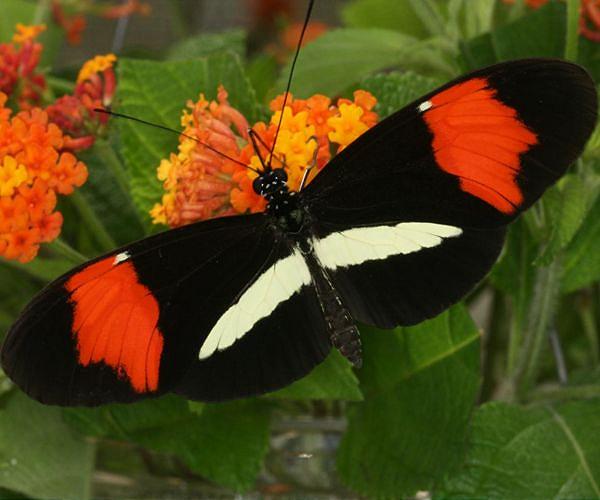
Butterfly species vary widely in their ability to regulate body temperature, according to a new survey in Britain.
The research, published this week in the Journal of Animal Ecology, suggests species that rely on shade to cool down are most vulnerable to climate change.
For the study, scientists caught some 4,000 wild butterflies, comprising 28 different species, and measured their body temperature using a fine probe.
The researchers also measured the ambient air temperature, as well as the temperature where butterflies were found perched on plants. The data revealed the temperature preferences of different butterfly species.
Butterflies are ectotherms, so they are unable to generate their own body temperature. Most butterflies benefit from a range of microclimates, varying combinations of sun and shade that help the insects regulate their temperature.
As landscapes have become increasingly monotonous as a result of human influence, however, their habitats feature fewer and fewer microclimates.
The latest data provided scientists with insights into how different species are coping. Researchers found butterfly species are either thermal generalists or thermal specialists.
Specialists, like the brown argus butterfly, Aricia agestis, and small copper butterfly, Lycaena phlaeas, were more likely to be found at specific temperatures within any given landscape.
"Butterfly species that aren't very good at controlling their temperature with small behavioural changes, but rely on choosing a micro-habitat at the right temperature, are likely to suffer the most from climate change and habitat loss," study author Andrew Bladon, postdoctoral research associate at the University of Cambridge, said in a news release.
Both brown argus and small copper butterflies have suffered greater population declines than other species over the last several decades.
Scientists said they hope the new findings will inform butterfly conservation efforts moving forward.
"As we plan conservation measures to address the effects of climate change, it will be important to understand not only the habitat requirements of different butterfly species, but also their temperature requirements," said lead researcher Ed Turner.
"With this new understanding of butterflies, we should be able to better manage habitats and landscapes to protect them, and in doing so we're probably also protecting other insects too," said Turner, curator with the University Museum of Zoology at Cambridge.
The research confirms what numerous studies published over the last several years have shown — that pollinators, including butterflies, moths and bees, benefit from heterogeneity.
"We need to make landscapes more diverse to help conserve many of our butterfly species," Bladon said.
"Even within a garden lawn, patches of grass can be left to grow longer — these areas will provide cooler, shady places for many species of butterfly. In nature reserves, some areas could be grazed or cut and others left standing. We also need to protect features that break up the monotony of farm landscapes, like hedgerows, ditches, and patches of woodland," he said.
