
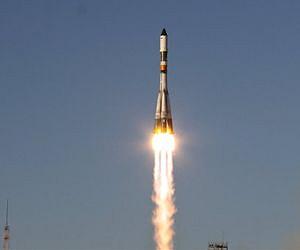
On August 24, the Soyuz-U carrier rocket, which was to bring Progress M-12M cargo spacecraft to the ISS, failed to reach orbit and burned up in the atmosphere shortly after launch. The intergovernmental investigative commission came to the conclusion that the crash was caused by a workshop error.
The commission has stated that the Soyuz-U rocket was launched in compliance with all the requirements.
The analysis of the third stage propulsion system operation and the results of telemetry information show the reduction of fuel consumption in gas generator due to the route's clogging. This caused the automatic emergency switch off.
Now experts should find out why this error was not detected and removed in time and whose fault it was.
Many experts tend to think that it is necessary to reduce human factor to minimum and to ensure better automatic control to detect human mistakes on the stage of pre-firing drill. This is the priority task.
The commission should introduce additional measures of control over new engines on the stage of their development and production. This will include the installation of video surveillance in the workshops of final assembly.
The rocket's crash and the fall of the Progress cargo spacecraft gave rise to speculations on the current state of the Russian space industry. Industry experts admit that problems exist but these problems are quite resolvable. One of the problems is a manpower problem.
Young specialists who are often given quite responsible task lack enough experience for their proper implementation. There are several aspects in the story with the fall of the Progress space ship.
The first one is a commercial aspect. The price paid is $100 million. But the question of image and reputation is even more important.
Today Russia still remains the undisputable leading provider of launch services in global space industry and it should not lose this position.
