
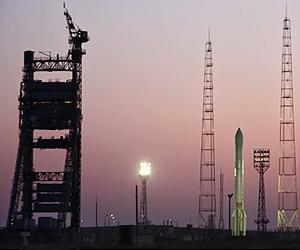
The number of space launches from Russia-based space ports Plesetsk and Vostochny must rise from 25% to 90% by 2020.
This ambitious goal was laid down in the state space development project presented at the meeting of the Skolkovo club for space technologies and telecom and published in its official Twitter blog.
Today, most of Russia's launches are carried out from the Baikonur space base, leased by the Kazakh government to Russia for $115 million a year. An additional $50 million is further spent on the maintenance of this facility. The lease is due to expire in 2050.
Russian Military Satellite Falls in Pacific
Fragments of a defunct Russian military communication satellite, Molniya-1-89, fell into the Pacific Ocean on Saturday night, a source from the space agency said.
"According to preliminary data, fragments of the Molniya satellite that did not burn up in the upper atmosphere reached the earth's surface on Saturday, April 7 at 3.17 am Moscow time [00:17 GMT] and fell into the Pacific Ocean," he said.
According to data provided by the U.S. Strategic Command, fragments of Molniya-1-89 satellite had to enter the Earth's atmosphere at 4.16 am Moscow time [01:00 GMT] (plus/minus 3 hours). According to the time, the satellite fell in the Pacific at 23.5 degrees S 205.3 degrees E. However, the time range of six hours indicates that the fragments could fall very far from this area.
Russian military communication satellite Molniya-1-89 was launched in August 1996 from the Plesetsk space center in northern Russia.
Molniya-1T series satellites were replaced by the Meridian-series in 2006.
