Russia and Turkey, at loggerheads since Ankara shot down a Russian warplane last week, have suspended talks on their joint TurkStream project to pipe gas to Turkey and southern Europe, Russia's energy minister said Thursday.
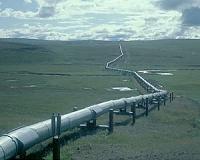
The TurkStream project would see four pipelines carrying Russian natural gas under the Black Sea, linking southern Russia to western Turkey.
This would allow Russia to achieve its goal of delivering gas to Europe while avoiding Ukraine.
Energy-poor Turkey already relies on Russia for over half of its natural gas imports.
"Currently talks are suspended," Energy Minister Alexander Novak said, quoted by RIA Novosti state news agency.
"Work on formulating agreements on TurkStream is suspended," particularly because "an intergovernmental commission on trade and economic cooperation has stopped meeting" under Russia's retaliatory measures against Ankara, he said.
The head of Russia's state gas giant Gazprom, Alexei Miller, told journalists earlier Thursday that Turkey would have to ask Russia to renew talks on TurkStream.
"If Turkey considers it needs this project, it can contact us," RIA Novosti quoted Miller as saying.
Russian President Vladimir Putin had announced the plan for the Turkstream pipeline a year ago in December 2014, after Russia junked its South Stream joint venture with EU firms, which would have taken gas to southern Europe and Bulgaria.
– 'Negative event' for Russia –
"This is a negative event for Gazprom," said Sberbank CIB analyst Valery Nesterov.
Russia risks losing some of the energy market in Turkey, one of its main customers, he said, and Gazprom has already spent billions of dollars building infrastructure for the pipeline.
Nevertheless Nesterov said this was better than the worst outcome, which would have been shelving the project altogether.
"The project has been postponed — maybe for a year. But I don't think for more than two years," he said.
Russia needs to complete a gas pipeline to Turkey by 2018 when its transit agreement with Ukraine expires, he added.
Work on building TurkStream was originally planned to start in the middle of 2015, while the first oil was set to flow at the end of 2016, building up to a capacity of 63 billion cubic metres per year.
But in early October Gazprom said the pipeline would carry just 32 billion cubic metres of gas.
Gazprom later that month said the pipeline project would be delayed as tensions heightened after Russia launched airstrikes against Islamic State and other targets in Syria, with its planes several times violating Turkish airspace.
The future of another major joint energy project, Turkey's first nuclear power station that Russia is building at Akkuyu in southern Turkey now also looks uncertain.
In June, Gazprom agreed with Anglo-Dutch Shell, Germany's E.ON and Austria's OMV to build another gas pipeline called Nord Stream-2 to Germany, doubling the flow from an existing Nord Stream pipeline under the Baltic Sea.
Poland and Ukraine, transit countries for existing Russian gas pipelines, have opposed the project.
Gazprom argues that Europe will increase energy consumption in the coming decades and only Russia can respond to the demand at competitive prices.