
Russia on Saturday said there has been a thaw in its chilly relations with the Western military alliance NATO, ahead of high-level informal talks between the two sides next week.
"In fact the ice has been broken," Russia's ambassador to NATO Dmitry Rogozin told the Echo of Moscow radio station in an interview.
"The ice has been broken because the informal NATO-Russia meeting on Monday marks a resumption of large-scale activity in all our cooperation with the alliance."
Rogozin described the talks as an informal meeting of the NATO-Russia Council and said it would only differ from a formal meeting as there would be a limited number of participants and no fixed agenda.
In Brussels, a NATO spokesman confirmed that the meeting was planned but said it was not a full NATO-Russia Council "just an informal meeting of ambassadors".
NATO Secretary General Jaap De Hoop Scheffer is also expected to take part.
Relations between Russia and NATO endured a severe chill over Moscow's August conflict with Georgia, with Western countries strongly objecting to Russia's recognition of two Georgian breakaway regions.
"Things need to be sorted out. You should not pretend that nothing has happened. In August there was a serious clash, not just an armed clash in the Caucusus, but a clash of two approaches over how to ensure security," Rogozin said.
"NATO's approach, based on double standards, did not suit us at all," he added, reaffirming Russia's distrust of Georgian President Mikhail Saakashvili.
High-level talks between Russia and NATO were frozen in August over the conflict but technical and working-level discussions have continued.
Rogozin held exploratory talks with de Hoop Scheffer in mid-December in the first high-level contacts since the Georgia war.
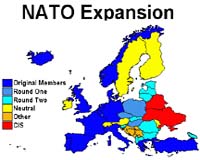
Russia has also been angered by NATO's open door policy in regard to former Soviet states Georgia and Ukraine. NATO decided in April that the pair would join one day, although a fast-track approach has been ruled out for now.
Rogozin said he hoped the NATO chief could meet Russian First Deputy Prime Minister Sergei Ivanov on the sidelines of the Munich security conference in February.
Share This Article With Planet Earth
