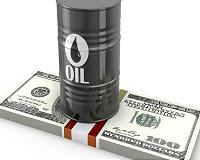
Anticipation building ahead of key market indicators this week weighed against mixed oil production signals to give oil yet another shot at a rally Tuesday.
Comments from Russian President Vladimir Putin that his country was on board with a proposal from the Organization of Petroleum Countries to freeze, or even cut, crude oil production sent crude oil prices soaring to yearly highs on Monday.
By Tuesday, the sentiment turned around after some Russian oil companies said they were either reluctant to support Putin's rhetoric or moving for higher production from some Middle East operations and put negative pressure on crude oil prices in overnight trading.
In terms of actual market dynamics, the International Energy Agency said global crude oil supply increased by 600,000 barrels per day in September. Demand, meanwhile, is expected to grow by 1.2 million bpd this year and in 2017.
"Growth continues to slow, dropping from a five-year high in third quarter of 2015 to a four-year low in third quarter of this year due to vanishing OECD growth and a marked deceleration in China," its monthly market report said.
Crude oil prices pulled back from steep overnight losses to post modest gains at the start of U.S. trading. The price for Brent crude oil was down 0.2 percent to $53.03 per barrel. West Texas Intermediate, the U.S. benchmark price for oil, was down 0.1 percent from the previous close to open at $51.29 per barrel.
The price movement may reflect anticipation building ahead of data released late Tuesday from the American Petroleum Institute and Wednesday from the U.S. Energy Information Administration on supply and demand. The IEA's report Tuesday, and past information from API and EIA, shows a narrowing gap between supply and demand.
Low demand and high oil supplies helped pull crude oil prices from $100 per barrel in 2014. A report from a global energy summit in Istanbul said global energy demand growth is set to fall.
On the economic front, Charles Evans, the president of the Federal Reserve Bank of Chicago, said in a speech Tuesday in Australia the U.S. labor force is not as strong as it could be and there's a slack in employment that's not necessarily showing up in weekly data.
He added that he's not yet seen "clear and convincing evidence that inflation is headed up to 2 percent," a benchmark envisioned by U.S. policymakers.
Retail gasoline prices moving against the seasonal grain
Washington DC (UPI) Oct 10, 2016 –
Refinery issues and problems associated with Hurricane Matthew pulled the national average consumer price for gas up even as motor club AAA said demand dropped.
AAA reports a national average retail price for a gallon of regular unleaded gasoline at $2.25, only slightly more than one week ago, but about 4 percent, or 7 cents per gallon, more expensive than one month ago.
In mid-September, refineries in the United States start shifting to a winter blend of gasoline, which is less expensive to make because there are fewer environmental safeguards needed in cooler months. After the Labor Day holiday, consumer demand drops off and those two factors tend to pull gasoline prices lower.
AAA said Hurricane Matthew, which left hundreds of people dead in its wake, forced the closure of fuel terminals in Florida, Georgia and South Carolina. With Matthew sparing most of Florida, the motor club said in its retail market report that vessels were arriving at port by Friday afternoon. Most coastal ports reopened in the region by Monday as the remnants of Matthew moved out to sea.
"Barring any delays due to flooding and power outages, tanker trucks should be able to access terminals and quickly resupply stations across the impacted areas," AAA said.
Of three states most heavily impacted by the storm, Georgia had the highest state average price at $2.28 per gallon. Georgia's state average, however, is actually less than it was before Hurricane Matthew hit.
AAA said gas supplies in the areas impacted by Hurricane Matthew have adequate supplies of gasoline.
Great Lakes states, however, continued to get the short end of the stick with "significant" spikes coming as a result of continued problems at regional refineries, like BP's refinery in Whiting, Ind., the largest in the region.
The least volatile state in the region, Illinois, saw prices at the pump move up 2 percent from last week to $2.33. The most volatile, Indiana, saw prices increase 5 percent from last week. Problems at BP's refinery last year pushed some markets above $3 per gallon.
The U.S. Energy Information Administration said it expected retail gasoline prices to average $1.92 per gallon by December.