
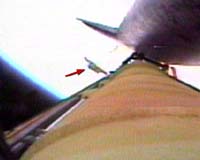
The first night launch of a space shuttle in four years will not prevent cameras and radars from tracking the type of debris that caused the Columbia disaster in 2003, a top NASA official said Monday. Discovery is scheduled to lift off in early December from the Kennedy Space Center, on Florida's east coast, to continue construction of the International Space Station (ISS).
Without returning to night launches, NASA would be unable to meet its goal of launching 15 shuttle missions to complete construction of the ISS by 2010, when the three-shuttle fleet is set to retire, said shuttle program manager Wayne Hale.
"I don't think there is any significant differences between processing for a launch in the dark than in the day," Hale told reporters.
"I feel confident that we would see a large piece (of debris)," he said.
He added that NASA's radar could be calibrated to ensure it has not missed a small piece or one that falls off more than two minutes after the launch.
The three space shuttle missions that followed the Columbia disaster, including two focused on improving safety, took place during the day to allow cameras to detect the loss of foam insulation from the orbiter's troublesome external fuel tank.
Columbia's heat shield was pierced by foam insulation that peeled off its fuel tank during liftoff, causing the shuttle to disintegrate as it returned to Earth with seven astronauts aboard in February 2003.
Discovery is scheduled to launch December 7, although it could liftoff a day earlier. It will be the second ISS construction mission since the Columbia tragedy.
The National Aeronautics and Space Administration has modified the external fuel tank to prevent large pieces of foam from falling off during liftoff and put in place procedures to check the shuttle's heat shield while in orbit.
After two shuttle missions aimed at improving safety in July 2005 and July 2006, NASA in September successfully resumed ISS construction that had been halted after the Columbia accident.
Source: Agence France-Presse
