
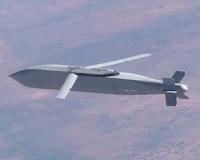
A new Joint Standoff Weapon variant has proved its capability in an operational test conducted by Raytheon and the U.S. Navy.
The precision-guided glide bomb, in the new C-1 configuration, was dropped from about 20,000 feet by an F/A-18 Super Hornet and successfully engaged a broad set of land targets, Raytheon said.
"This test demonstrated yet again JSOW's ability to deliver decisive battlefield effects with precision stand-off capability against some of the most challenging land targets facing our warfighters," said Celeste Mohr, JSOW program director for Raytheon Missile Systems. "Naval aviators also recently employed JSOW C in a tactically realistic, cave-defeat scenario that included heavy radio frequency counter-measures."
The new JSOW C-1 variant features a two-way Link 16 data link, which gives it the capability to engage moving maritime targets as well as moving land targets.
Raytheon said that before the latest successful test, the C-1 variant was seven-for-seven in developmental and integration test phase use against both stationary land targets and maritime moving targets.
JSOW is a family of air-to-ground weapons that use an integrated GPS-inertial navigation system with enhanced guidance algorithms. JSOW C prosecutes fixed land targets and uses an imaging infrared seeker for increased accuracy in the terminal phase.
