
Talks to conclude a contract to manage Europe's Galileo satellite navigation system project are set for more delays, EU Transport Commissioner Jacques Barrot said Friday. The negotiations, with a consortium of eight private partners, on a "concession contract" were originally scheduled to end in late 2005 but that date was pushed back a year to the end of this month.
"A programme of this importance involves tough negotiations," Barrot said.
"I think that even if there is a little delay in signing this concession contract, things are on the right track," he told reporters in Brussels, without indicating how much longer the talks would go on.
"No one has an interest in seeing these talks fail," he added.
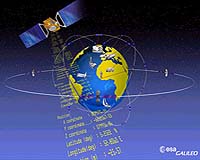
Europe hopes the Galileo project, ultimately involving around 30 satellites and scheduled to be up and running commercially by 2010, will rival the reigning GPS network from the United States.
Unlike GPS, which is controlled by the US military, Galileo will stay under civilian control, increasing the European Union's strategic independence.
The new system is expected to be more accurate than GPS, giving mariners, pilots, drivers and others an almost pinpoint-accurate navigational tool.
The private sector consortium will manage the deployment and operational phase of Galileo — from 2008 onwards — and is to be overseen by a public body called the Galileo Supervisory Authority.
The EU has still not decided where this body will be based from among 11 candidates: Prague, Ljubljana, Munich, Malta, Brussels, Strasbourg, Madrid, Barcelona, Cardiff, Athens, and Rome.
The bloc's transport ministers are scheduled to examine the candidacies at a meeting in Brussels on Tuesday.
Source: Agence France-Presse
