
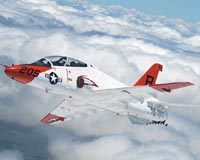
The U.S. Navy on Friday released results of a comprehensive review of reported physiological episodes involving T-45 trainer and F/A-18 fighter aircraft to determine the facts and procedures involved, ordering further steps to reduce the number of episodes experienced by pilots.
The review was meant to determine what factors lead to the incidents, including command, control, and communications, oxygen systems, cabin pressurization, proper maintenance, better monitoring of pilots, and other issues.
Vice Chief of Naval Operations Adm. Bill Moran directed commander of the U.S. Pacific Fleet Adm. Scott Swift to lead the review last April after the Navy grounded T-45 trainer aircraft at several Naval Air Stations.
The CR recommends establishing a single organization within the Navy to study and resolve PE incidents. The command, which is expected to be headed by a "more experienced aviation flag officer," will be responsible for redesigns of oxygen system equipment and the establishment of an integrated life support system program. The program would manage oxygen and cabin pressure systems and physiological monitoring.
Physiological episodes, which include hypoxia from oxygen deprivation, has become a serious issue with Naval and Air Force aviation. All F-35s at of Luke Air Force Base have been grounded indefinitely due to multiple reports of hypoxia, which accounts for over 25 percent of the fleet.
Northrup Grumman to upgrade F-16 radars
Northrop Grumman is to upgrade dozens of U.S. Air National Guard F-16s with APG-83 Scalable Agile Beam Radar, the company announced this week.
The APG-83s will be the active electronically scanned array for 72 ANG F-16s to meet a U.S. Northern Command Joint Emergent Operational Need for homeland defense.
"AESA radar upgrades are critically important to give the F-16 community t … read more
