
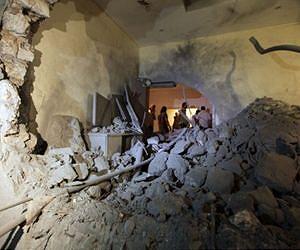
A NATO air offensive around key Libyan cities has significantly impacted Moamer Kadhafi's forces, halting the shelling of the rebel-held port of Misrata in the last 24 hours, the alliance said Friday.
NATO warplanes destroyed 11 surface-to-air missile systems, five radar units, two artillery vehicles as well as several ammunition depots and command and control centres across Libya in the last few days, a spokesman said.
"The situation on the ground remains dynamic with significant changes," Wing Commander Mike Bracken told a news conference from NATO operation's headquarters in Naples, Italy.
"Just in the past 72 hours, our strikes in Tripoli, around Sirte and the port town of Misrata have significantly impacted the command and control capability of the Kadhafi regime, his supplies of ammunition and weapons, and his ability to launch attacks," Bracken said.
An air strike two nights ago in Tripoli hit a command and control bunker complex in Tripoli that was used to coordinate attacks against civilians, he said, reiterating that NATO was not trying to kill Kadhafi.
In the veteran leader's hometown of Sirte, "rows and rows of ammunition bunkers that had been resupplying his forces in Misrata and Brega have been effectively reduced to rubble, reducing his troops' capability to attack and, more specifically, diminishing their will to fight," Bracken said.
NATO "had no reports of shelling" against Misrata on Thursday, while more than 20 ships were able to freely enter the port in the past 72 hours, he said.
The rebels took full control of the port on Wednesday after they ejected regime forces from the airport. The regime has besieged Misrata for two months, relentlessly shelling the city to try to take it from rebels.
"In Misrata, Kadhafi forces have been put on the backfoot by those who have been defending the city and its vital port," said NATO deputy spokeswoman Carmen Romero.
The alliance said it will keep striking Kadhafi forces until he abides by NATO demands to stop attacking civilians, return his troops to barracks and allow unhindered access to humanitarian aid.
"There is definitely not a stalemate. We are seeing real progress in our mission," Romero said.
Share This Article With Planet Earth
