
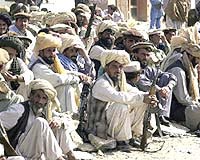
NATO on Tuesday voiced concern at a deal signed by Pakistan with Islamic hardliners recognising the rule of sharia law in the northwest Swat valley bordering Afghanistan.
"It is certainly reason for concern," said NATO spokesman James Appathurai, when asked about the impact of the deal which was reached in return for a ceasefire between the Taliban militia and the Pakistan army.
"We should be concerned by a situation in which extremists would have a safe haven," and "we would not like to see that get worse," he added.
Asked if the NATO-led International Security Assistance Force for Afghanistan (ISAF) would face more attacks from Taliban fighters now untouched by Pakistani forces, Appathurai replied: "I don't know the answer."
The sharia deal on Monday, widely seen as a government concession to militants, followed talks between ministers in the troubled North West Frontier Province (NWFP) and a local militant leader, Soofi Mohammad, on formalising the implementation of Islamic law.
The agreement will cover Pakistan's Malakand area, one of the districts of NWFP, which includes the Swat valley and is home to around three million of the estimated 20 million people who live in the northwest province.
The Islamists vowed to disarm once Islamic justice was established.
On Tuesday, Pakistan denied making concessions to the militants.
"It is in no way a sign of the state's weakness. The public will of the population of the Swat region is at the centre of all efforts and it should be taken into account while debating the merits of this agreement," said Information Minister Sherry Rehman.
Share This Article With Planet Earth
