
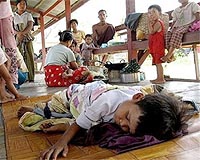
The youngest survivors of Myanmar's catastrophic cyclone, some of them lost or separated from their families, are at risk of further trauma, the UN children's fund said Monday.
UNICEF said it was setting up special areas in relief camps to support children and try to create a sense of normal life with makeshift schools.
"In any situation where you have children living under extremely stressful conditions, both physically and emotionally, it is important that they are provided with a space where they feel safe and provided for," said Ramesh Shrestha, UNICEF Representative in Myanmar.
In just one township in the devastated Irrawaddy Delta region where Cyclone Nargis struck on May 3, UNICEF is trying to identify the parents of 24 children sheltering with strangers, it said.
Aid groups are struggling to bring help to 1.5 million survivors in need of food, water and shelter, as they attempt to stave off a humanitarian crisis.
Across the delta region, children can be seen hungry, barefoot and dressed in rags, begging on the sides of the roads from passers-by.
Many anguished parents there have told AFP that they have nothing but coconuts and bananas to feed their children, and with no substantial meals they are beginning to weaken and fall ill.
Reporters have seen children trying to catch fish and crabs in muddy canals, surrounded by the bloated corpses of the dead.
UNICEF said the greatest risk to children was infectious diseases such as cholera, diarrhoea, dysentery, dengue fever and malaria caused by flooding and a lack of clean water.
