
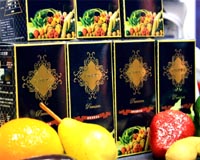
While the traditional culinary art of fermentation has yielded a range of tasty, nutritious dishes from pickles to sauerkraut, the science of fermentation is showing some life-changing impacts on health.
At Tokyo-based Saver Consulting Co., the power of fermentation comes down to "macro-biotic" enzyme nutrition. The company's signature product is Macrobi Enzyme, a dark molasses-like liquid extracted from 80 different kinds of vegetables, fruits, and grains, then fermented and matured for over six years. The final product is marketed as a nutritional-digestive supplement.
Traditional macrobiotic theory, which generally calls for balanced food consumption of locally grown seasonal foods, and no meat, dairy, eggs, or alcohol, was developed and popularized after the Edo Period (1603-1868), a time when the peasant diet was based almost on rice and soybeans. Japanese entrepreneur and nutritionist Michio Kushi (1926-2014) is credited with introducing a modern version of the theory to the U.S. in the early 1950s.
Mr. Kushi's work has had a long-lasting impact on nutritional awareness, with several institutes bearing his name now dotting the globe. Most macrobiotic advocates stress eating lots of fresh fruits and vegetables low in fat, and high in fiber, vitamins, minerals and enzymes, and devoid of all saturated fats and hydrogenated oils. It is similar to a vegetarian diet in many respects.
"With vitamin B12 supplements, the benefits of a macrobiotic diet are numerous," says columnist and engineer Emma Medu for HubPages' diet corner. "Macrobiotics has a huge impact on human health, especially now, when people are hurrying all the time and dealing with high level of stress more than ever."
The enzyme element is central to the Macrobi product, where Mr. Kushi's echocia enzyme is mass-produced on a sprawling organic farm.
"Generally speaking, eating fermented food nourishes the good bacteria in the intestines and has a cleansing effect," explains Saver Consulting sales exec Yui Akimoto at a recent Tokyo health food expo. "Fermented foods help good bacteria to proliferate, which in turn help synthesize vitamins, minerals, amino acids and essential fatty acids into components the body can easily absorb and utilize."
The company touts its three-stage fermentation process, which utilizes natural yeast and lactobacillus, followed by local acetic bacteria, which imparts tolerance to high temperature. Once bottled, the product can be stored for long periods without being refrigerated.
Macrobi Enzyme's taste is semi-sweet, semi-sour, and leaves a hint of ripened apple. It can be taken straight or diluted with water or juice. There are no strict directions on frequency of use, but Mr. Akimoto recommends at least one swallow with each meal.
Specific health benefits include expedited waste and toxin removal, from the body, improved digestion, improved glucose oxidation (more energy), detoxification, and improved cell regeneration, the company says.
"The enzymes' nutritional benefit for ladies can be more pronounced than with men," says Mr. Akimoto. "They tend to notice the effect on skin, complexion, hair, eyes, weight, and overall energy more quickly."
The company markets at 60-count box of 10gram Macrobi Enzyme for 27,800 yen and a 620gram bottle for 25,800 yen.
Globally, growing demand for processed foods and increasing health consciousness is driving the food enzymes market. Mordor Intelligence expects the value of the food enzymes market to reach nearly $2.7 billion by 2020, reflecting annual growth of 8.1%.
