
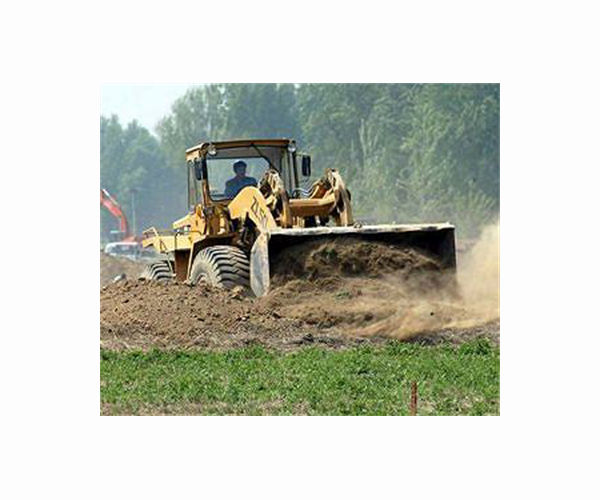
Urban construction, especially the ongoing large-scale expansion and utilization of underground space, has resulted in massive excavated soil and rock (ESR) from buildings and subways. A novel solution suggests sintering utilization is a feasible method to recycle solid waste to construction products from the perspective of technology, environment, and policy through qualitative and quantitative methods in Shenzhen, China.
This study discusses the feasibility of ESR environmental-friendly sintering technology and aims to explore the utilization of sintering from the technical point of view, environmental protection restrictions, and governmental policy levels. Specifically, the case object of this study is ESR generated in Shenzhen.
First, the technical evaluation aims to determine whether the soil conditions of ESR meet the criteria of relevant standards and technical sintering utilization specifications.
The investigation of ESR samples in Shenzhen reveals that the soil types in each administrative region of the city are complex and diverse, and the ESR of high-content clay produced by the existing construction project in Shenzhen (2020) is estimated to be 37.3%, which can be recycled as the sintering raw materials. On this basis, we can estimate the entire amount of high-content clay that can be used as sintering raw materials in Shenzhen is close to 27 million m.
If some fired brick and tile plants operated in Shenzhen under the encouragement of competent authorities, using 27 million m of clay-rich ESR to sintered products instead of traditional disposal will save nearly 270 million yuan of disposal cost.
Researchers of this study also collected the actual emission data of some representative fired brick plants of ESR (or co-combustion) as sintering raw materials in China, and the actual air emission concentration of domestic factories can meet the "Emission Standard of Air Pollutants for Brick and Tile Industry (GB-29620-2013)", which showed that there was no implementation obstacle from the environmental perspective of sintering ESR.
Finally, at the policy level, mainly from the perspective of national and provincial policies and systems, the sintered brick industry belongs to the encouraged industry. It is feasible to promote ESR sintering utilization at the national and municipal policy levels.
Research Report:Feasibility study on using excavated soil and rock to sintering utilization
