
Iranian Foreign Minister Hossein Amir-Abdollahian will head to Moscow on Tuesday, the ministry said, days after negotiations on an Iran nuclear deal stalled amid new Russian demands.
"Russia has made its official demands loud and clear, and this needs to be discussed among all parties to the 2015 agreement, like all the demands that have been presented by other parties," foreign ministry spokesman Saeed Khatibzadeh told reporters on Monday.
"The foreign ministers of the parties (to the 2015 Iranian nuclear deal) are in constant contact", and Amir-Abdollahian "will go to Moscow on Tuesday to continue the discussions", Khatibzadeh added.
More than 10 months of talks in Vienna have brought major powers close to renewing the landmark 2015 Joint Comprehensive Plan of Action (JCPOA) on regulating Iran's nuclear programme.
But the negotiations were halted after Russia on March 5 demanded guarantees that Western sanctions imposed following its invasion of Ukraine would not damage its trade with Iran.
On March 11, the European Union's foreign policy chief Josep Borrell tweeted that the pause was "due to external factors," despite the fact that "a final text is essentially ready and on the table".
– Iran waiting on Washington –
The United States then put the ball in Iran and Russia's courts after the EU announcement.
"We are confident that we can achieve mutual return to compliance… (if) those decisions are made in places like Tehran and Moscow," State Department spokesman Ned Price said.
US Secretary of State Antony Blinken has dismissed as "irrelevant" the Russian demands for guarantees, saying that they "just are not in any way linked together".
But on Monday, Iran's foreign ministry spokesman repeated Tehran's position that the move had to come from the US.
"The remaining issues and points between us and the United States need political decisions in Washington", Khatibzadeh said.
"If they (the US) announce that they have made a decision, then all the delegations can return to Vienna" to finalise an agreement, he said.
"We are not at the point of announcing the agreement," he added.
Russia and Iran have seen relations improve in recent years, and Moscow plays a central role in enforcing the 2015 pact, in particular by receiving excess enriched uranium from Tehran.
The JCPOA aimed to ensure Iran would not be able to develop a nuclear weapon, which it has always denied seeking.
On Saturday, Britain, France and Germany warned against moves to "exploit" the JCPOA, seen as a tacit warning to Russia.
"Nobody should seek to exploit JCPOA negotiations to obtain assurances that are separate to the JCPOA," the British, French and German foreign ministries — the three European parties to the negotiations — said in a statement.
"This risks the collapse of the deal, depriving the Iranian people of sanctions lifting and the international community of the assurance needed on Iran's nuclear programme," they added.
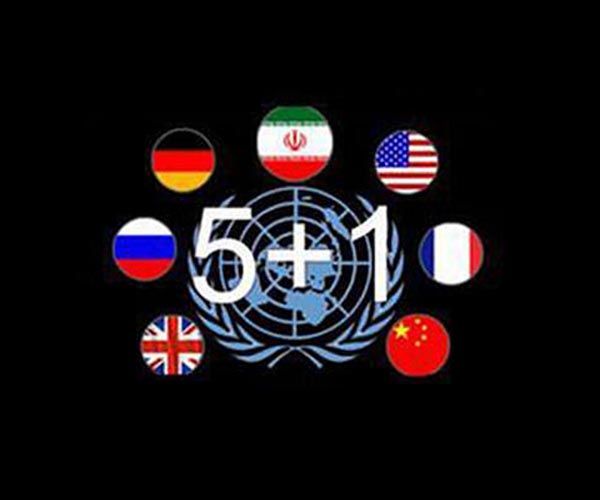
The current round of negotiations started in late November in the Austrian capital between Iran and Britain, China, France, Germany and Russia, with the US taking part indirectly.
The 2105 deal gave Iran sanctions relief in exchange for curbs on its nuclear programme.
But the US unilaterally withdrew from the accord in 2018 under then-president Donald Trump and imposed tough economic sanctions on different sectors, including oil exports.
Russian demands threaten to derail Iran nuclear talks
Vienna (AFP) March 11, 2022 –
Last-minute Russian demands related to the Ukraine conflict threatened to derail the near-complete process of reviving the Iran nuclear deal Friday, as the EU announced negotiations would be paused.
The EU's foreign policy chief Josep Borrell tweeted that the pause was "due to external factors," despite the fact that "a final text is essentially ready and on the table".
The current round of negotiations started in late November in the Austrian capital Vienna between Britain, China, France, Germany, Iran and Russia, with the US taking part indirectly.
They had progressed most of the way toward their aim — the revival of the 2015 Joint Comprehensive Plan of Action (JCPOA), which began unravelling when former US President Donald Trump withdrew from the deal in 2018.
The EU diplomat who has been chairing the talks, Enrique Mora, told reporters that delegations had got to the point of "negotiating footnotes".
He praised in particular the United States and Iran for their "very constructive, very positive approach", adding that he hoped to see the talks resume "very, very soon".
However, last week Russia said it was demanding guarantees that the Western sanctions imposed on its economy following its invasion of Ukraine would not affect its trade with Iran.
As with the original JCPOA in 2015, Moscow had been expected to play a role in the implementation of any fresh deal, for example by receiving shipments of enriched uranium from Iran.
"The Ukraine conflict has now entered the Vienna talks in a very real way," Eric Brewer of the Nuclear Threat Initiative told AFP.
He said the "blanket guarantee" demanded by Moscow "has thrown a wrench into this process at the last minute that really threatens to upend talks and prevent the restoration of the JCPOA".
The United States on Friday put the ball in Iran and Russia's court after the EU announcement.
"We are confident that we can achieve mutual return to compliance… (if) those decisions are made in places like Tehran and Moscow," State Department spokesman Ned Price told reporters.
– Energy 'weapon' –
One EU source close to the talks said that Russia had at first made "reasonable" requests related to its civilian nuclear activities in Iran, but that they were then broadened "outside the scope of the JCPOA".
Another diplomat from one of the European parties to deal said that "if the Russian block is confirmed to be definitive, we will be obliged to look at other options," adding that Moscow could not be allowed to "take the deal hostage".
The head of the British delegation Stephanie al-Qaq tweeted that she was "deeply disappointed" at the pause in the talks.
The last-minute hitch must be resolved in the "next few days", she warned, or else the agreement was "likely to unravel".
After he withdrew from the JCPOA, Trump went on to reimpose sanctions on Iran, including on its vital oil sector.
That prompted Iran to start disregarding the curbs laid down in the deal on its nuclear activity.
The JCPOA aimed to ensure Iran would not be able to develop a nuclear weapon, which it has always denied seeking.
"Russia's gambit may be to delay the revival of the deal in order to avoid a flood of Iranian oil on the market" and the subsequent fall in prices, Clement Therme, Iran specialist at France's Paul Valery University told AFP.
"In keeping prices high, the Kremlin can use energy as a weapon against the West," he added.
– Russia rejects blame –
As for Iran itself, "the Islamic Republic isn't in a position to counter the Russian strategy," Therme said.
"Moscow is making use of Iran's weakness."
Tehran itself has blamed the US for "creating challenges" in the final stage of the talks.
Iranian foreign ministry spokesman Saeed Khatibzadeh said in a tweet Friday that "no external factor will affect our joint will to go forward for a collective agreement".
Russia's ambassador to the UN in Vienna, Mikhail Ulyanov, told reporters outside the talks venue that he rejected "attempts to put all the blame on the Russian Federation", insisting that other parties to the talks "need additional time".
A European source said it was now up to Iran and China to apply pressure to Moscow to make sure the deal was not scuppered.
