
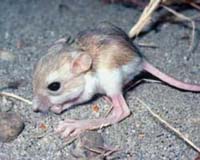
An Australian-led team has discovered a unique, primitive type of land mammal that lived at least 16 million years ago in New Zealand.
The team, led by University of Adelaide paleontologist Trevor Worthy, said the discovery of tiny fossilized bones of the mouse-like creature is the first hard evidence that New Zealand once had its own indigenous land mammals.
The scientists say their finding could prompt a major rewrite of prehistory textbooks.
Worthy and colleagues from New Zealand discovered fossilized parts of a jaw and a leg from the mammal, unearthed in sediment from the St. Bathans lake bed on New Zealand's South Island.
"Scientists have long held the view that New Zealand has this weird and wonderful avian biota that lived on the ground because there were no mammals to impede or compete with birds," said Worthy. "It appears that this little mouse-like animal was part of the fauna on the ancient Gondwana supercontinent and it got stuck on New Zealand when the latter separated more than 80 million years ago."
The findings appear in the current issue of the Proceedings of the National Academy of Sciences.
